

How a logistics company accelerated its operations and cash flow thanks to a custom made system
The client operates in logistics and specializes primarily in the transportation of bulk materials. It is one of the largest players, has been operating on the Czech market for over 20 years, operates an extensive fleet of hundreds of vehicles and ensures a high volume of transportation across various types of materials.
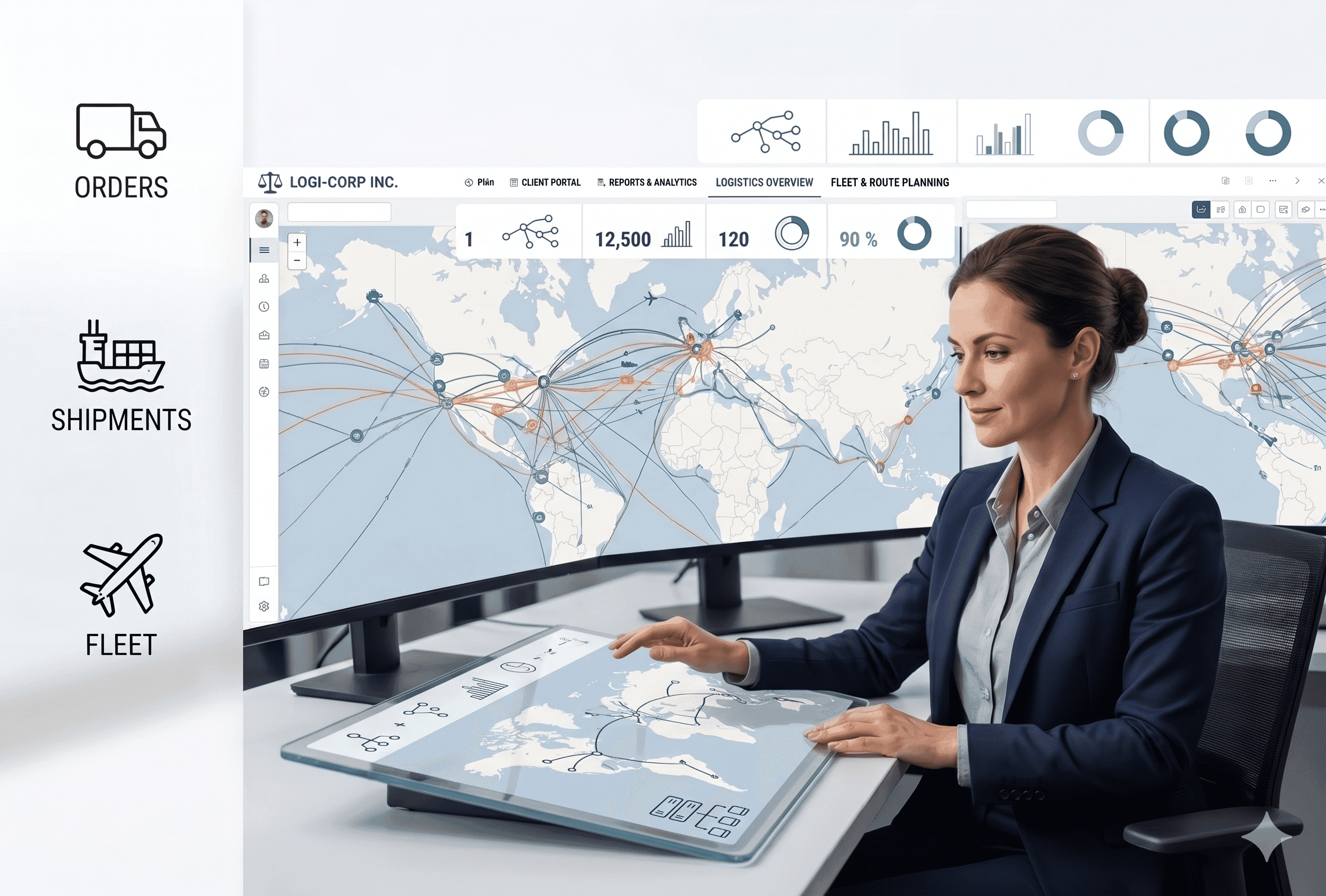
As the company grew, so did the complexity of operations, interdependencies, and coordination requirements between dispatchers, drivers, administration, accounting, and external carriers.
Thanks to our joint efforts, we have managed to build a new system that, among other things, has significantly reduced the time between the driver obtaining the documents and the final invoicing of the client's customer, often on the same day. This was practically impossible before.
Initial situation
The client's company is growing rapidly, but this also brings with it typical problems (process and data fragmented environment) that arise in such large operationally managed companies:
bottlenecks in key processes,
dependence on specific people and their know-how,
fragmented systems and data,
incomplete / inconsistent data inputs,
complex transfer of information between departments,
slow follow-up administrative processes (including invoicing),
limited ability to scale performance without increasing the team.
It wasn't a single application problem. It was a combination of process, data, and integration limits that hindered operations and further development.
Why custom software?
It was clear from the beginning that the client's processes, relationships and operational reality were so specific that a conventional off the shelf system would mean a number of compromises. Moreover, the client had already tried and rejected some off the shelf systems before.
That's why we agreed to develop custom software that addresses their unique logistics processes and specific operational problems during transportation, while also allowing the system to be further developed as the company's needs change.
The goal was not just to digitize forms, but to create a unified operational system that:
centralizes data and key processes,
makes responsibilities and order status clear,
accelerate the flow of information between people and systems,
and will create a foundation for further automation (including planning and subsequent implementation of AI / OCR).
Our approach: Analysis + agile, results-oriented delivery
Joint analysis of processes and connections
We started the collaboration with an extensive analysis of processes, roles, data flows and integration links. The key was to properly describe:
how the activity is done today,
what are its requirements and exceptions,
who enters it,
and how it should behave in the context of the entire system.
This is often the biggest challenge and the most underestimated part of similarly large projects. The larger the system, the more dependencies, entity life cycles, and impacts of "small changes" on other parts of the solution.
In practice, this means that even a seemingly minor adjustment to a key entity (e.g. reservation / ride) often opens up a discussion about dozens of other aspects:
how the change should be reflected further in the process,
who will see it,
when to validate,
what will affect billing, planning, reporting or mobile application,
and how it should behave throughout its life cycle.
This is the area where a lot of the project time is burned, but this is where the most value is created because the right foundation is set.
Pressure for quick outcome and agile delivery
Technically, we are capable of designing and implementing a wide range of solutions from common integrations to complex custom APIs and integration logic. However, something else proved to be the key factor in this project over the long term, and that is speed of delivery and work with continuous feedback .
The client has a very strong focus on results, i.e.:
implement the feature as soon as possible,
get it up and running or at least verify it,
get feedback from people who actually use it,
add details,
and iterate further.
This is the right approach for us in operational systems. For features that really unlock easier work for people or solve a specific pain point, it very often turns out that the final form will only emerge after several iterations and from real user use. But the important thing is to get the solution into reality quickly and tune it according to real use.
The speed of delivery was also helped by the fact that we built on a proven admin template and a unified Docker environment from the beginning, which allowed us to prioritize outcomes and quickly provide features for users to verify.
What we delivered
Unified system for managing key processes
Based on the analysis, we designed and gradually implemented a unified system, which is now deployed in production and supports the daily functioning of the company.
The system unifies key processes and data across operations and improves visibility into:
who solves what,
what condition is it in,
where the job/ride is located,
what information is missing,
and why something happens (or doesn't happen).
The result is greater transparency, less chaos in the transfer of information, and better operational management.
Mobile application for drivers on Android + iOS
Part of the solution is a mobile application for drivers, currently deployed for Android, with a version for iOS also in development.
The mobile application helps in particular with:
providing information about trips/orders,
transmitting important operational data,
digitalization of selected processes in the field,
sending documents and supporting documents,
reducing the number of phone calls and manual searches between drivers and the dispatch center / billing department, etc.
The key benefit is that information enters the system faster and in a more structured form, which has a direct impact on other processes in the company's back office.
Fast processing of document photos and significantly faster invoicing
One of the main goals of the project was to speed up the flow of documents from the field to drivers and the subsequent administration. In this area, we are already seeing a very concrete impact:
it is possible to process documents from drivers very quickly,
and invoice on a daily basis, unless prevented by other administrative circumstances, which was practically impossible before the new system was implemented.
This is a fundamental change compared to the original situation and at the same time one of the biggest business benefits of the entire solution. It is a real improvement in cash flow and operational efficiency, as well as a significant increase in work comfort.
Digitalization of key processes and standardization of data inputs
We gradually digitized and unified the processes that had the greatest impact on the speed and accuracy of operations, for example:
sending and processing documents,
transfer of important data between business, operations and administration,
sharing information about orders/trips or invoices,
unification of data inputs across roles and systems.
This reduced the error rate, limited duplication and accelerated the work of subsequent teams.
Access for external carriers and customers
The solution also includes a module for external carriers (subcontractors), which allows third parties to be involved in the process without gaining access to internal data or sensitive parts of the system.
Users with highly restricted rights can be created in the system,
superadmin assigns the user to a specific external carrier,
the carrier then only sees their journeys, their status and relevant documents.
A key feature is the support of so-called reverse invoicing for carriers who run orders externally and do not have full logistical support like an internal fleet.
In practice, the system prepares a basic overview (report) of what the carrier has shipped and what compensation he is entitled to. The compensation is then calculated according to defined rules, an invoice is issued based on the report and the client pays.
This significantly simplifies cooperation with subcontractors, increases transparency, and reduces the amount of manual tracking and administrative irregularities.
A connected ecosystem instead of manual rewriting thanks to suitable integrations and API
One of the key pillars of the project was integration. The goal was to have data flow automatically between systems and not have people retype information manually.
Examples of implemented integrations and connections
Protank (Protank Dynamics)
Exchange of data about locations, equipment and drivers. Connection to data related to GPS / tachographs and other operational analytics.
Scheduling API (algorithmic scheduling)
Design of a general API for data exchange for trip planning and implementation of an integration layer according to defined structures.
Accounting / economic system (custom API integration)
Data exchange for subsequent administrative and accounting processes.
Weight system
Automatic transfer of data from weighing individual trucks when empty or full and subsequent invoicing and sending of data to the right people/companies.
Map services
Use of API for rendering and route/distance calculations (including support for map functions for operational use).
ARES
Additional connection for working with company data.
Google Cloud services (e.g. queues / task processing)
Use of cloud APIs for asynchronous processing and stable running of integration processes and large amounts of data.
APIs that we exposed
In addition to connecting to third-party systems, we also built our own integration interfaces:
endpoints for receiving GPS / traffic data (webhook-based scenarios),
endpoints for asynchronously receiving data from planning services,
our API for the driver's mobile application,
extensible internal integration API for managing core data across systems.
This created a solid foundation for further development without the need to glue new features to the side every time.
Technological framework of the solution
We built the solution as a modern web application with a scalable backend, an emphasis on rapid iteration, and reliable operation in the cloud.
Application stack
The backend runs in Laravel framework (PHP),
the frontend is built on React + Inertia.js (rapid UI development on top of the server-side backend without the need for a separate API for each part),
reliable PostgreSQL database,
real-time communication over WebSockets (e.g. for notifications, status updates and operational events),
containerization, where the entire solution runs in Docker (consistent development and production environments),
hosting is Google Cloud together with Cloud Run, Cloud SQL, Cloud Tasks and other components,
and finally we used a hybrid approach with React Native for mobile app development.
Sped-up delivery thanks to UI template
To speed up delivery and focus on business logic instead of pixel-by-pixel development, it was worth doing a little research and choosing a suitable commercial admin template with ready-made UI components. At a relatively low cost, this significantly reduced development time and delivered a consistent UX without major compromises.
Results and benefits
The project brought the client much more than new software. It brought a new way of working with processes, data, and operations.
The most significant benefits today
fast processing of documents from drivers,
invoicing practically on a daily basis,
significantly better overview of traffic and data,
unification of work across roles and systems,
less dependence on individuals,
faster verification and deployment of new features thanks to agile delivery,
the ability to handle more work with fewer people,
technological basis for further automation and optimization.
Today, the system helps manage the daily work of more than 400 employees and has become a key part of the company's operations.
What turned out to be the most important lesson learned
For systems of this size, the biggest challenge is usually not programming the feature. The biggest challenge is:
correctly describe the reality of traffic,
clarify the process on both sides,
understand the connections throughout the entire lifecycle of data and entities,
and only then quickly deliver a functional solution.
It is the combination of clear processes + rapid iteration that makes digital transformation truly successful.
What's next for us?
We are continuing to develop the project and preparing further steps that will build on the existing foundation:
further development of trip planning,
possible connection to SMS gateway,
further expansion of integrations (e.g.: operational equipment, other systems),
integration of services related to fuel cards and driver matching,
OCR / AI document reader for automated reading of content from documents and conversion into structured data (API-based access).
Summary
This collaboration shows that for a large logistics company, it doesn't make sense to solve individual pain points in isolation. The real impact comes when they connect:
properly designed processes,
high-quality data inputs,
integrated system,
mobile field work,
and rapid iterative delivery of changes.
The result is higher operational efficiency, faster invoicing, better decision-making, and the company's ability to grow without a linear increase in administrative burden.
FAQ:
Why didn't you go with a ready-made (off the shelf) solution?
Because the client is dealing with very specific processes and dependencies that are typical for its operation and scope. An off the shelf solution would mean a number of compromises, bypassing the system or returning to Excel and manual steps.
The goal was to create a system that respects the reality of operations, unifies data, and at the same time can be further developed according to the changing needs of the company.
What was the biggest benefit of the project from a business perspective?
One of the biggest benefits was a significant acceleration of the flow of documents from the field and the subsequent administration. Thanks to the rapid processing of photos of documents from drivers, invoicing can be done practically on a daily basis. In addition, the project brought a better overview of operations, more accurate forecasting, and the ability to handle a larger volume of work without a linear increase in the number of people.
Who is such a project suitable for and when does custom software make sense?
Custom software typically makes sense when a company:
has complex operational processes,
uses multiple systems that do not communicate well with each other,
hits the limits of manual coordination,
is dependent on key people,
and wants to grow without just adding more administration.
At such a stage, it is no longer just about "better software", but about the company's ability to continue to scale effectively.
What role did integrations play and why were they so important?
Integrations were one of the key pillars of the project. The goal was to have data flow automatically between systems and not have people retype it manually, which was previously done and resulted in many errors. Connections to operational, planning, weighing and accounting systems helped speed up processes, reduce errors and create a more uniform data base for operations and administration.
 React
React IOS
IOS Docker
 Laravel
 Android
 React Native
 JavaScript
 Google Cloud Computing (GCP)
 PHP
PHP
Featured Case Studies
Projects that might be interesting to you
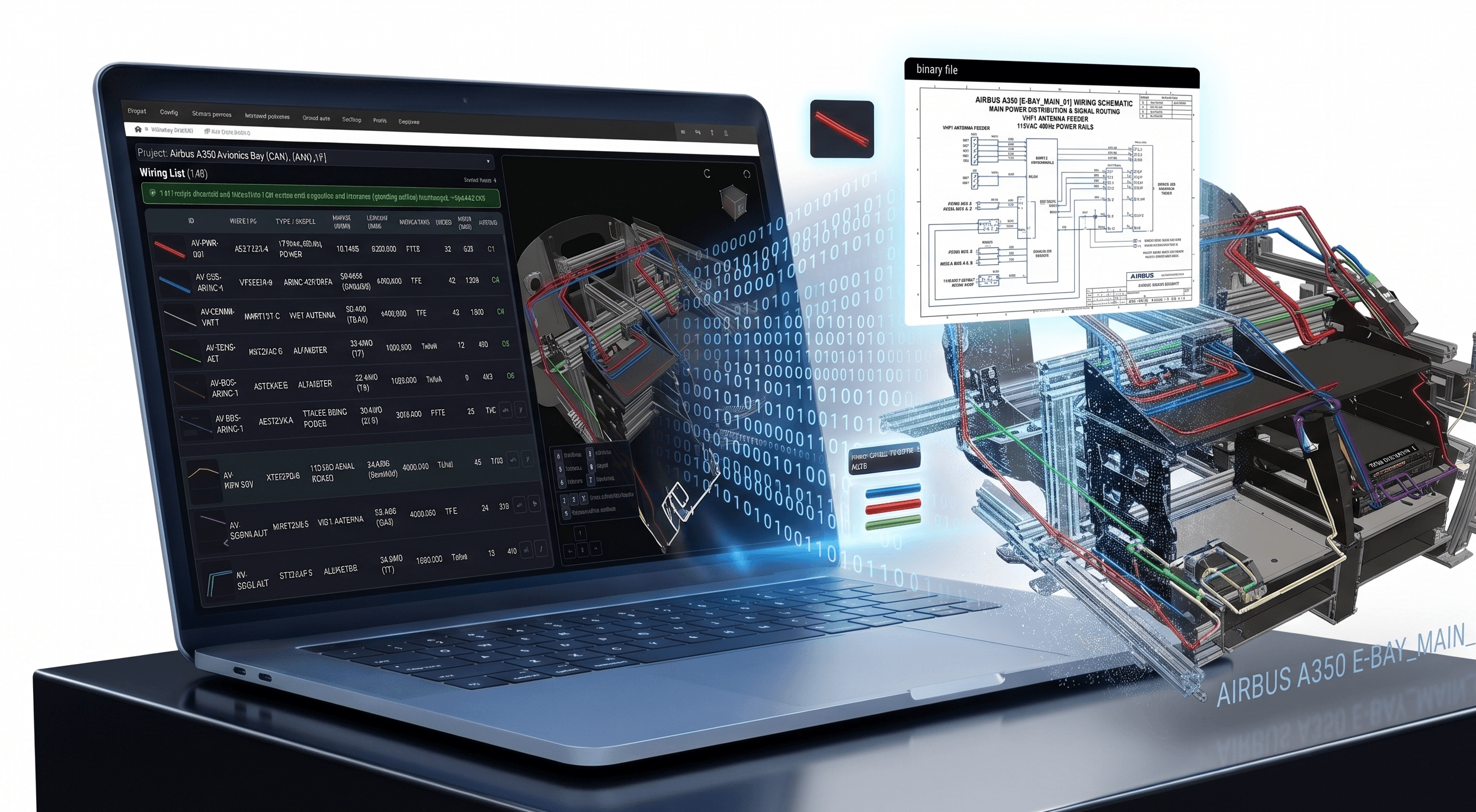
Quoting wire frames: from half a day per frame to about 15 minutes
An automotive supplier that bends wire and welds seat frames now breaks down a new frame in about 15 minutes. Before, the same analysis took half a day to a full day of manual clicking per frame - and a project can carry twenty of them.
View Case Study
How we helped Nokia Bell Labs
Nokia Bell Labs is one of the world’s most prestigious research institutions, boasting a 100-year legacy of ground-breaking innovations. For Moravio, partnering with such a renowned organization was both an honor and a challenge. Our mission was to convert cutting-edge research into a fully functional product, while allowing the Nokia Bell Labs team to focus on what they do best - pushing the boundaries of innovation.
View Case Study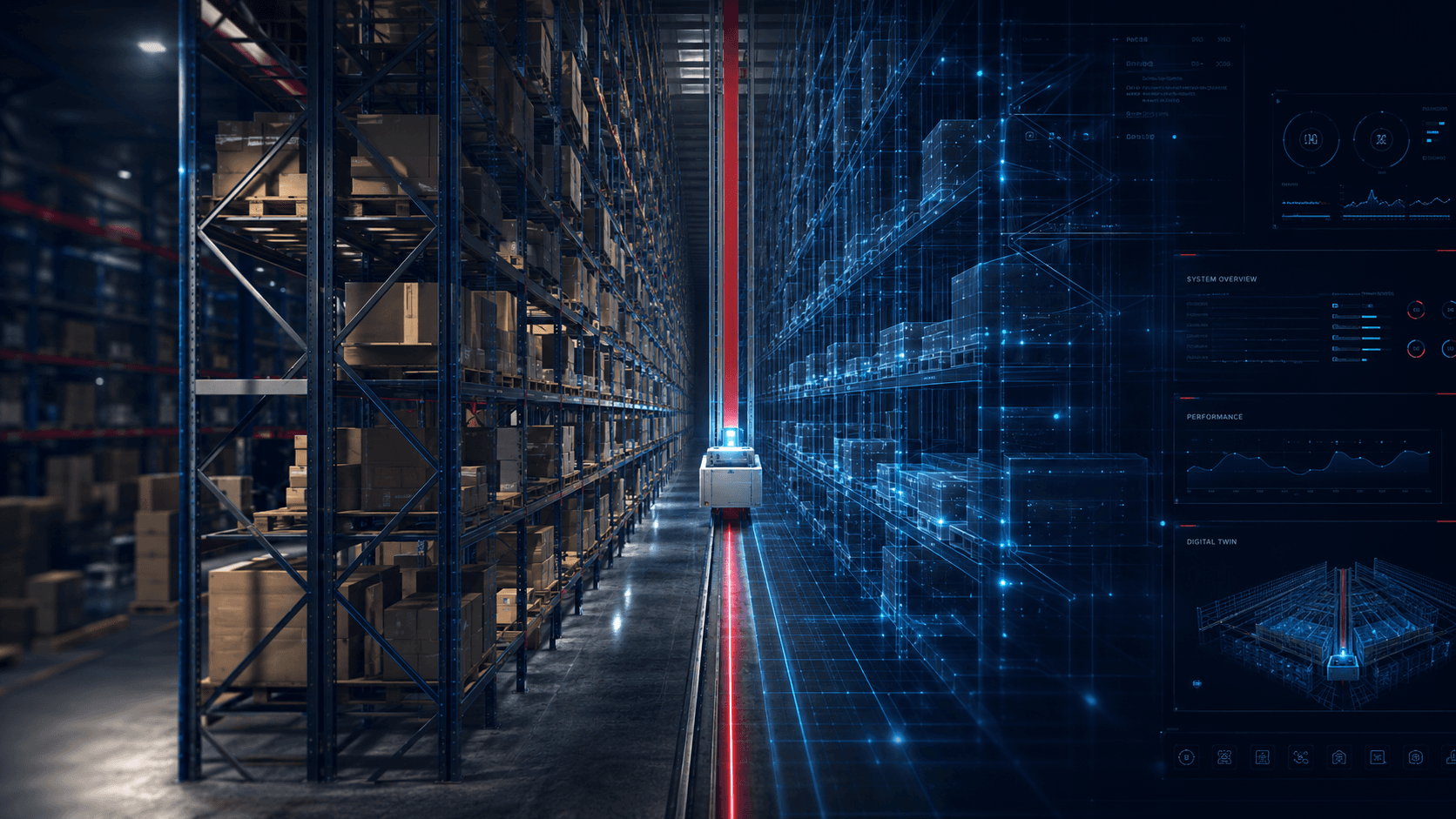
A digital twin for automated warehouses: the numbers before the investment
Four aisles or five? One crane or two? A different picking strategy? A European manufacturer of automated warehouse systems can now test these decisions in a simulation and read the answer in pallets per hour — before a single rack is ordered.
View Case Study






More context helps
Describe the situation
A few useful details help us prepare: who is affected, how the work happens today, what has already been tried, and why this matters now.