
Logistics and Transportation
Logistics companies don't fail because they lack software. They fail because their systems don't talk to each other. Shipments live in one tool, invoices in another, fleet data in a third, and the real picture of the business lives in someone's Excel file. We build custom transportation software that connects all of these into one process, so your team stops copying data between systems and starts actually managing operations.
The Real Problem Most Logistics Companies Face
Most transportation companies we work with have already invested in software. They run a TMS for dispatching, an ERP for finance, a workflow tool for invoice approvals, and often a BI layer on top. On paper, everything is covered.
In practice, the weak point is always between the systems. Data doesn't flow automatically. Process status gets lost in email threads. Exceptions (a partial invoice, a credit note, a shipment that covers multiple orders) break the standard flow and land on someone's desk for manual resolution.
The result → a lot of manual coordination between departments, slow invoicing, unclear margins, and a dangerous dependency on a few people who are the only ones who know how the whole process actually works.
A pattern we see across logistics clients : the moment people lose trust in the data inside their systems, they start building parallel records in Excel. Each team creates its own version of reality. And that's when digitalization starts hurting the company instead of helping it. The source of truth must be systemic, traceable, and shared across teams. If Excel fills that role today, it's a warning sign.
What We Build for Transportation and Logistics
We develop custom logistics management software that covers the full operational chain. Not isolated tools, but connected systems where data flows from shipment creation through invoicing to reporting without manual re-entry.
→ Fleet and shipment management. Real-time vehicle tracking, maintenance scheduling, driver communication, and delivery status updates. We built an automated ERP system for Ridera, a major solid fuels supplier, handling order processing and logistics automation from the ground up. For MALL Group, the largest e-commerce player in Central and Eastern Europe, we worked on their delivery platform managing high-volume shipment operations across multiple countries.
→ Invoicing and financial automation. This is where logistics companies lose the most time. We've seen the same pattern repeatedly: operations sends an email to finance with what should be invoiced, for what period, at what price. Finance then creates the invoice manually. That model is slow, error-prone, and impossible to scale. Proper transportation software development means the invoice gets generated directly from confirmed operational data, with automatic matching of received invoices against expected amounts. People only step in for genuine exceptions.
→ Route optimization and planning. GPS integration, geofencing for secure cargo zones, and algorithms that factor in traffic, vehicle capacity, delivery windows, and fuel costs. The goal isn't just finding the shortest route. It's finding the most cost-effective one.
→ Warehouse and supply chain visibility. Inventory tracking, order fulfillment workflows, and end-to-end supply chain monitoring. For companies that handle both warehousing and transport, we connect WMS with TMS so the handoff between warehouse and driver is seamless. We also offer dedicated ERP, WMS, and logistics integrations as a standalone service.
→ Analytics and reporting that reflect reality. If your dashboard shows yesterday's exports from Excel, it's not real reporting. Transportation software services should include live dashboards showing what was ordered, shipped, invoiced, disputed, and what the actual margin is. The difference between a company that collects data and a company that manages it starts here.
Where Automation and AI Make Sense (and Where They Don't)
A large part of the problem in logistics can be solved with classic process automation, integrations, and clearly set business rules. That's the foundation. Without it, you're automating chaos.
AI adds value when the process is already well-structured but needs help with complex or ambiguous cases. For example: one invoice covering multiple shipments, partial invoices, data that isn't entered uniformly, or unstructured emails and attachments that need parsing. In these situations, AI can extract data from documents, suggest matching, identify anomalies, and recommend next steps for operations and finance.
But AI is not a fix for a broken process. If a company doesn't know where the right data comes from, who owns the process, and what the rules for invoicing and approvals look like, no AI tool will save it long-term.

Transportation and Logistics Software Development in Moravio
Don't Forget the Field: Drivers Matter Too
When companies think about logistics digitalization, they usually picture invoices, dashboards, and ERP integrations. But communication with drivers is just as important.
"Don't underestimate the users of your software. We've seen it all. That's exactly why this work should be trusted to professionals who deeply understand the logistics niche, the edge cases, and what drivers, dispatchers, and finance teams actually need from the system every day."
How do drivers get loading and unloading instructions? Where do they find contacts, route changes, or fuel card information? Is onboarding for new drivers structured, or does it happen over WhatsApp and phone calls? How do delivery notes and receipts get back to the office?
In our experience, this part of digitalization is consistently underestimated. When dispatching and back-office processes get connected with a well-designed mobile app for drivers, the entire transport chain speeds up. Drivers get information faster, the company receives documents in structured form sooner, and downstream processes (including invoicing) move much closer to true automation.
We've worked with companies ranging from Ostrava Airport to large e-commerce delivery operations, and the lesson is always the same: the field and the office have to run on the same system.
How a Properly Connected Logistics Process Looks
In a well-designed system, there's one clear flow from shipment through invoicing to reporting.
The shipment is created with correct links to the customer, carrier, service type, price, and expected billing scenario. When a received invoice arrives, the system reads it, recognizes key data, and attempts automatic matching against the shipment. If everything checks out, the invoice goes through approval and posting without manual intervention.
If something doesn't match, the system flags it as an exception, describes the deviation, and routes it to the right person. Standard cases get processed automatically. People handle only what genuinely requires judgment.
The same applies to outgoing invoices. Once the shipment is confirmed and the client's business rules are met, the system generates the document. Finance monitors exceptions and compliance, not every individual invoice.
Above all of this sits a dashboard showing purchases, sales, margins, invoice statuses, uninvoiced shipments, and disputed cases. Live. Not reconstructed from last week's export.
We've Done This Before. Let's Do It for You.
Our team has built logistics software for fuel suppliers, e-commerce delivery platforms, airports, and transportation companies across Central Europe. We know the difference between a demo that looks good and a system that survives first contact with real dispatchers, drivers, and finance teams. Our senior developers and solution architects use modern cloud-native stacks, and we can embed our engineers directly into your team through our Forward Deployed Engineering model if that fits your workflow better.
Whether you need a focused MVP for transportation app software development or a full logistics platform that replaces five disconnected tools, contact us today to discuss your project!
Projects in This Industry
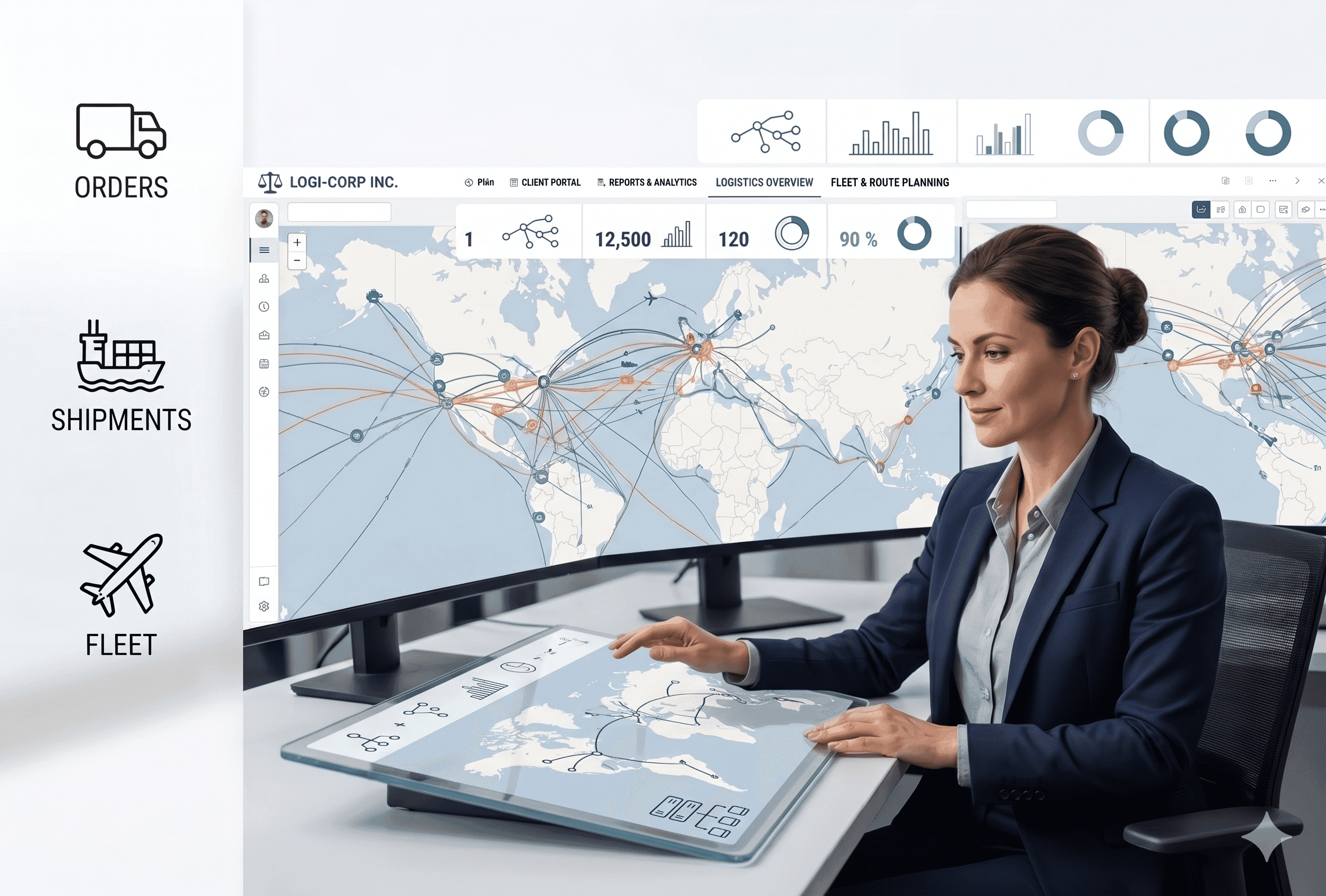
How a logistics company accelerated its operations and cash flow thanks to a custom made system
The client operates in logistics and specializes primarily in the transportation of bulk materials. It is one of the largest players, has been operating on the Czech market for over 20 years, operates an extensive fleet of hundreds of vehicles and ensures a high volume of transportation across various types of materials.
View Case Study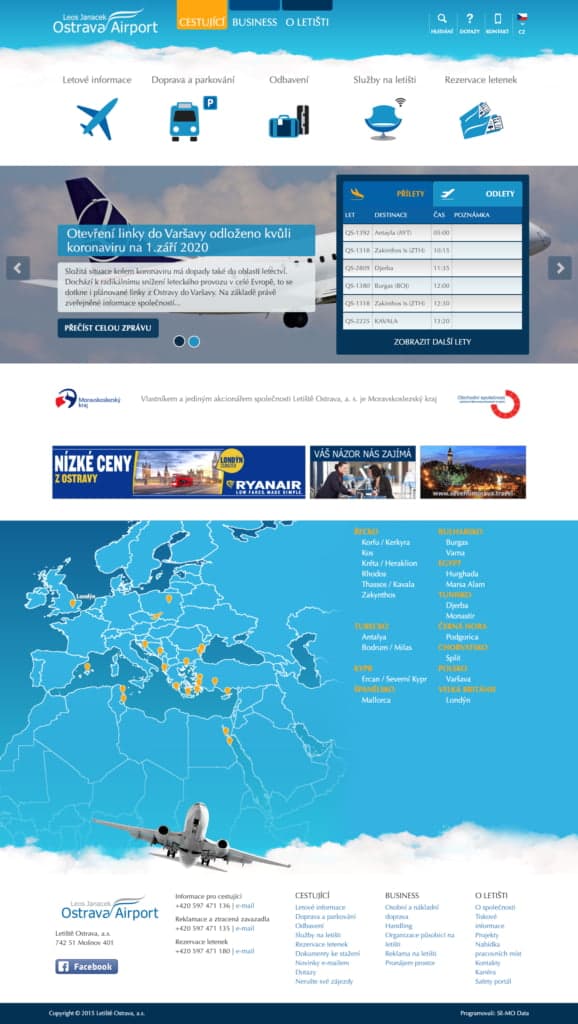
Effective PPC campaign management for Ostrava airport
Long-term cooperation in ensuring the promotion of the airport through PPC campaigns.
View Case Study
Delivery solutions for MALL GROUP
MALL GROUP is the largest e-commerce player in Central and Eastern Europe. We cooperate on several levels.
View Case StudyFrequently Asked Questions
It depends on scope. A focused module like automated invoice matching or a driver mobile app can be ready in 2–3 months. A full logistics platform connecting TMS, ERP, invoicing, and reporting typically takes 5–9 months. We work in 2–3 week sprints, so you see a working version early and can adjust direction based on real feedback. The key question isn't just timeline. It's whether your current process is well enough understood to digitize it cleanly. If not, we start with a discovery phase to map out the flow before writing code.
Yes, and this is one of the most common starting points for our projects. We've integrated with systems like SAP Transportation Management, Microsoft Dynamics 365, and various specialized TMS and accounting tools. The important thing is whether your current systems have open APIs. If they do, integration is significantly easier and more stable. If they don't, we'll assess the options and recommend the most practical path forward, whether that's building an integration layer, replacing a specific tool, or connecting through available data exports.
More context helps
Describe the situation
A few useful details help us prepare: who is affected, how the work happens today, what has already been tried, and why this matters now.