

From Excel to a system that runs the orders
For years spreadsheets kept a Czech B2B packaging supplier's orders moving — until they became the ceiling. We built a custom order-management system around their real process, added an AI assistant where it made sense, and a year later they came back to extend it.

This client operates under a strict NDA. We respect their privacy and protect their business secrets, so we can’t share details about the project.
Client context
The client is a Czech B2B supplier of protective packaging: the materials that keep goods safe in shipping. They stock and ship from their own warehouse and resell partner products. Two owners run the company, one covering finance, one covering operations. Their buyers are practical, old-school purchasing people who value a supplier who answers fast.
The real problem
The whole order flow lived in Excel. It had worked for years, and that was the trap: the company could not grow past it. Adding people meant more hands in the same fragile spreadsheets. Formulas broke silently. Order status, customer history and documents lived in separate places, connected only by the owners' memory and retyping.
The owners knew the ceiling was real. What they needed was an ERP in function: one place where orders, customers and documents finally agree with each other. What they did not want was a big-name platform with licence fees they could not control. They wanted their own system, shaped to how they actually sell.
What we did first: understanding the business before the software
The project lead spent the first phase digging into how the business actually runs: how an enquiry becomes an order, what gets retyped where, which spreadsheet held which truth. The proposal that came out of it contained things the client had not asked for but recognised immediately as their own process. That understanding — plus a short working demo — is what won the trust to start.
What we built
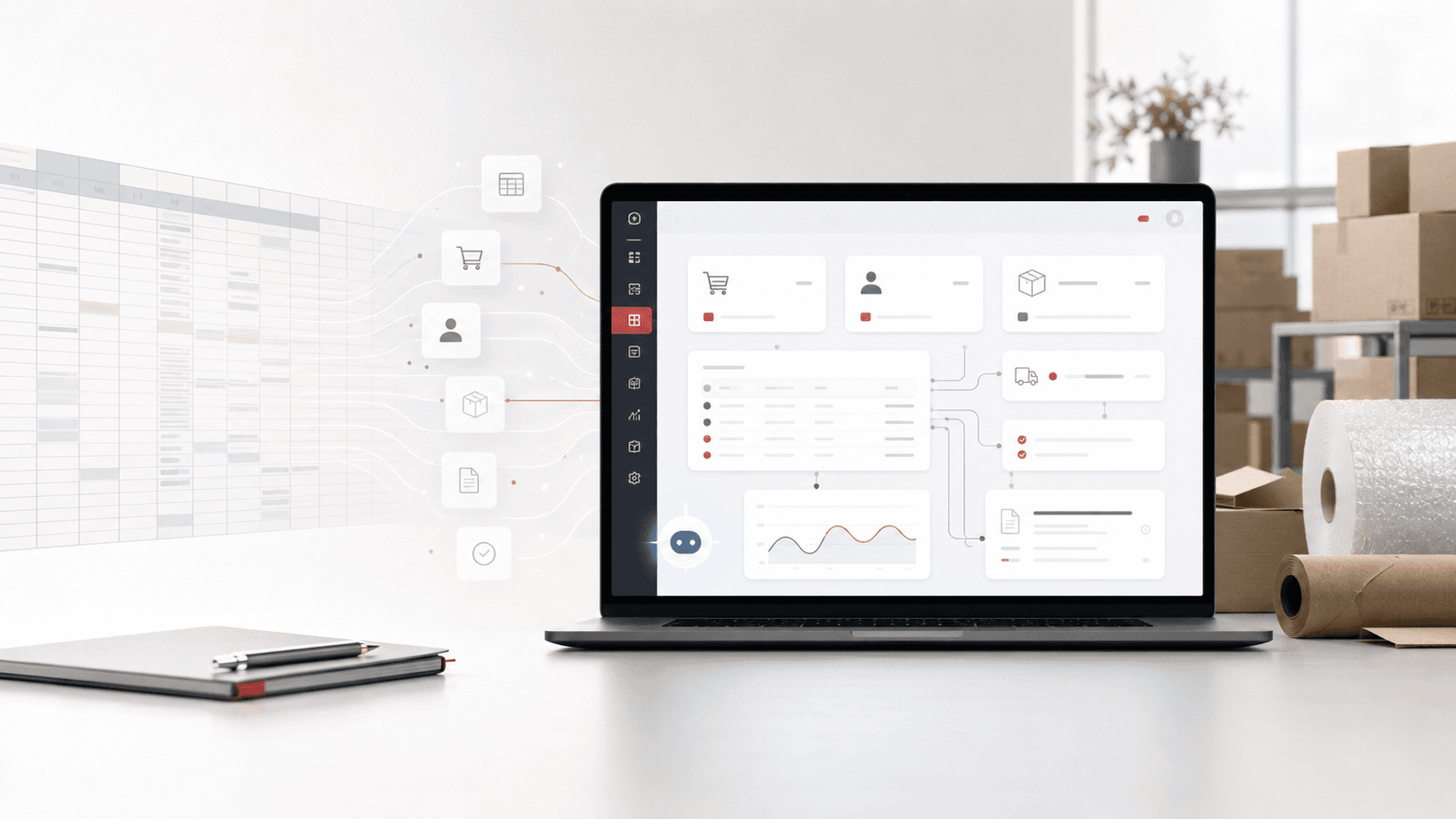
A custom order-management system that replaced the spreadsheets as the company's daily workplace:
Orders, customers and documents in one place. The status of every order is visible without opening a single Excel file. Changes are tracked, so numbers stop breaking silently.
An AI assistant inside the system. The owners can ask it to find, summarise or update things in plain language. It works on top of their data and stays their helper, with every change visible.
Incoming email lands where it belongs. The system takes in order-related emails and attaches them to the records they concern, so the inbox stops being a second, unofficial database.
Built to be extended. The same platform is now the foundation for the next phase the owners requested: connecting their public website directly to the internal system, so enquiries flow in without retyping.
The system is the client's own: their code, no per-seat licences, running on their infrastructure.
What we are building now: the warehouse
The order book was the first half of the problem. The second half was the warehouse itself.
Stock lived where the paperwork happened to land. Goods sat on pallets that nobody could price without walking out and counting them. When two people worked the same stock in different places, the numbers stopped agreeing, and the only way to reconcile them was by hand.
The warehouse module now being built into the same system works the way the floor already works:
Every pallet carries a QR code. A worker scans it with a tablet instead of writing a number down. Until the codes are live, the system prices a pallet by its oldest item, and the scan replaces the estimate with the real figure.
The system suggests the oldest stock first. When an order comes in, it offers only the pallets needed to cover it, oldest first, so old goods move before new ones and nobody has to remember what came in when.
Non-standard pallets stay out of the way. They are hidden until someone asks for them, because the safest default on a busy floor is the ordinary case.
Corrections are honest in both directions. A shortage is recorded as a debt against the stock. An overage goes onto the pallet and into the order as a plus. Neither is quietly absorbed.
Receiving is tied to the purchase order it belongs to, including goods held in an external warehouse, so what arrives is checked against what was ordered rather than against memory.
Because the core platform is already running, these tools can be introduced in short, focused steps — reducing manual checking and bringing the warehouse closer to the same clear view the owners now have over their orders.
The results
Excel is no longer the operational system. The order book moved into one tool both owners use daily.
The silent-failure risk is gone. A broken formula in a shared spreadsheet used to be invisible until it hurt; now changes are tracked and data is validated.
The knowledge stopped being personal. Order status and customer history live in the system, so the business no longer depends on which owner remembers what.
The owners came back. A year after the first delivery, the client returned to extend the platform to their website and sales process. For a two-owner company watching every crown, that is the honest verdict on the first phase.
The warehouse is the next half, and it is in build now. The same system is being extended into stock, pallets and receiving. That work is unfinished, so this case claims no numbers for it.
What we learned, and what went wrong
In the first months, we delivered but did not show it enough. The client saw invoices, did not see progress, and honestly told us they were not sure they were getting what they paid for. That was fair. We changed how the project ran: regular calls, visible budget, a clear list of what was coming next. Trust recovered, and the habit stayed. It is now how we run every project of this size: for a small company spending its own money, seeing the progress is part of the product.
The two owners also split on one thing: one was optimistic about AI in the system, one was sceptical. We did not argue. The AI assistant went in as an optional helper on top of a system that works fully without it. The sceptic keeps a system he can trust; the optimist keeps his assistant.
One thing made the collaboration especially practical: the owners had direct access to Martin Kratochvíl, the developer leading the project. Questions did not have to travel through layers of account management. When something in the process needed to be clarified, adjusted or prioritised, the people running the business could discuss it directly with the person building the system.
Ready to outgrow spreadsheets?
Still running orders through spreadsheets that only you understand? Book a free 30-min process review call. We map how your orders actually flow first, then automate the highest-volume steps — fixed scope, your data, your code.
These images were modified to comply with the client's NDA. The software interface remains unchanged.
 React
React TypeScript
 Node.js
 Docker
 ChatGPT
 Next.js
 Generative AI
 Google Cloud Computing (GCP)
Featured Case Studies
Projects that might be interesting to you
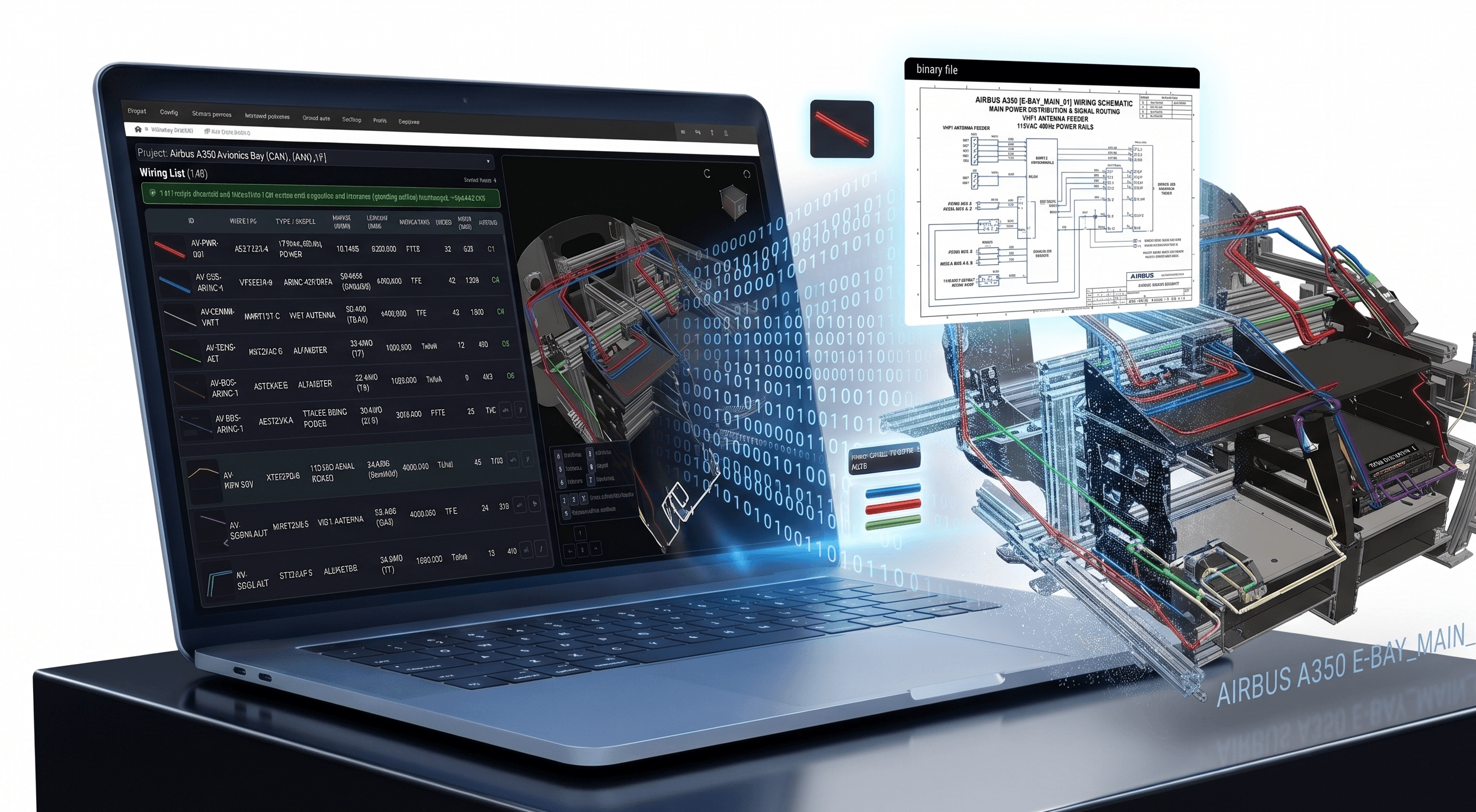
Quoting wire frames: from half a day per frame to about 15 minutes
An automotive supplier that bends wire and welds seat frames now breaks down a new frame in about 15 minutes. Before, the same analysis took half a day to a full day of manual clicking per frame - and a project can carry twenty of them.
View Case Study
How we helped Nokia Bell Labs
Nokia Bell Labs is one of the world’s most prestigious research institutions, boasting a 100-year legacy of ground-breaking innovations. For Moravio, partnering with such a renowned organization was both an honor and a challenge. Our mission was to convert cutting-edge research into a fully functional product, while allowing the Nokia Bell Labs team to focus on what they do best - pushing the boundaries of innovation.
View Case Study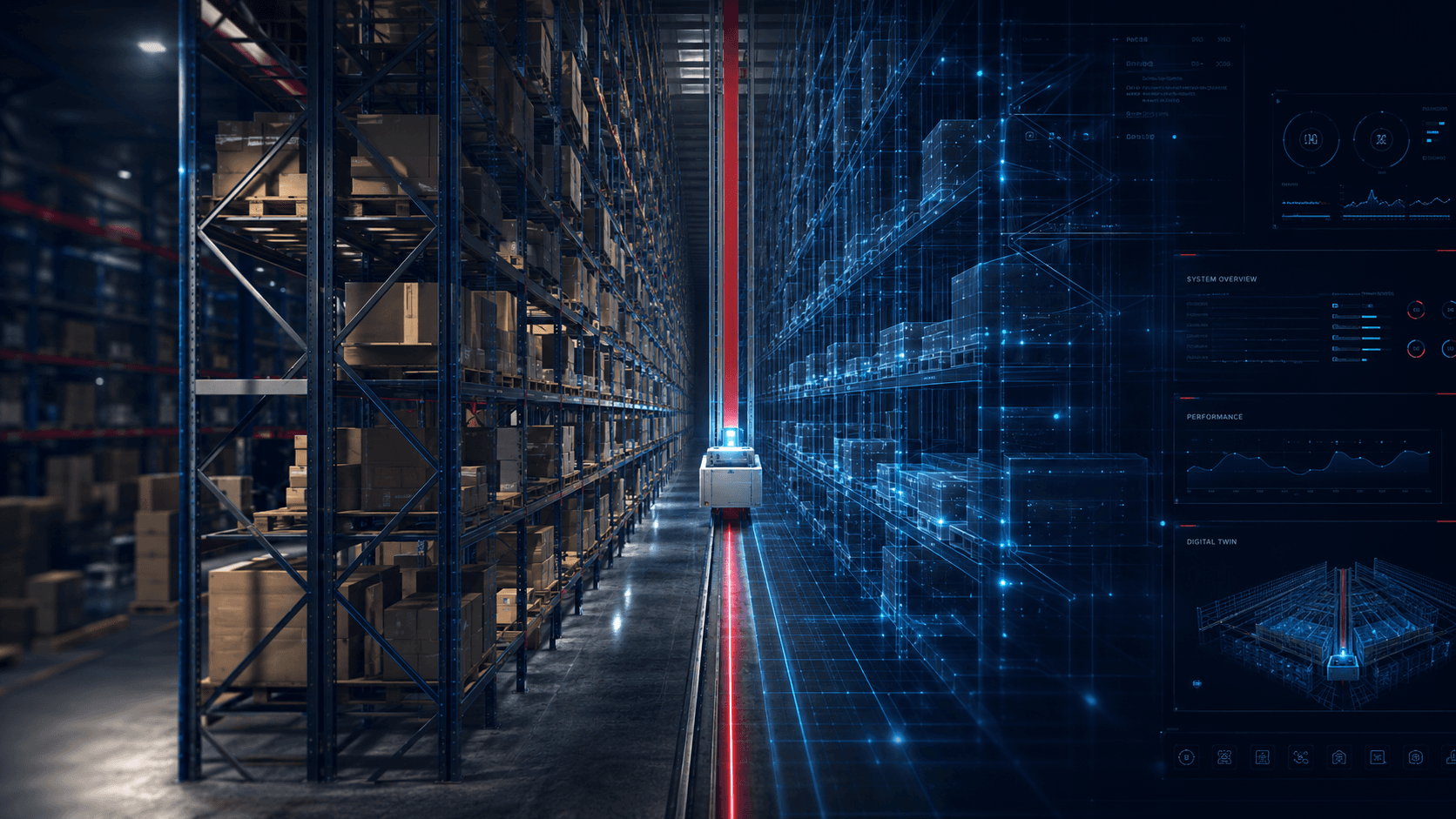
A digital twin for automated warehouses: the numbers before the investment
Four aisles or five? One crane or two? A different picking strategy? A European manufacturer of automated warehouse systems can now test these decisions in a simulation and read the answer in pallets per hour — before a single rack is ordered.
View Case Study








More context helps
Describe the situation
A few useful details help us prepare: who is affected, how the work happens today, what has already been tried, and why this matters now.