The Real Problem Most Manufacturers Face
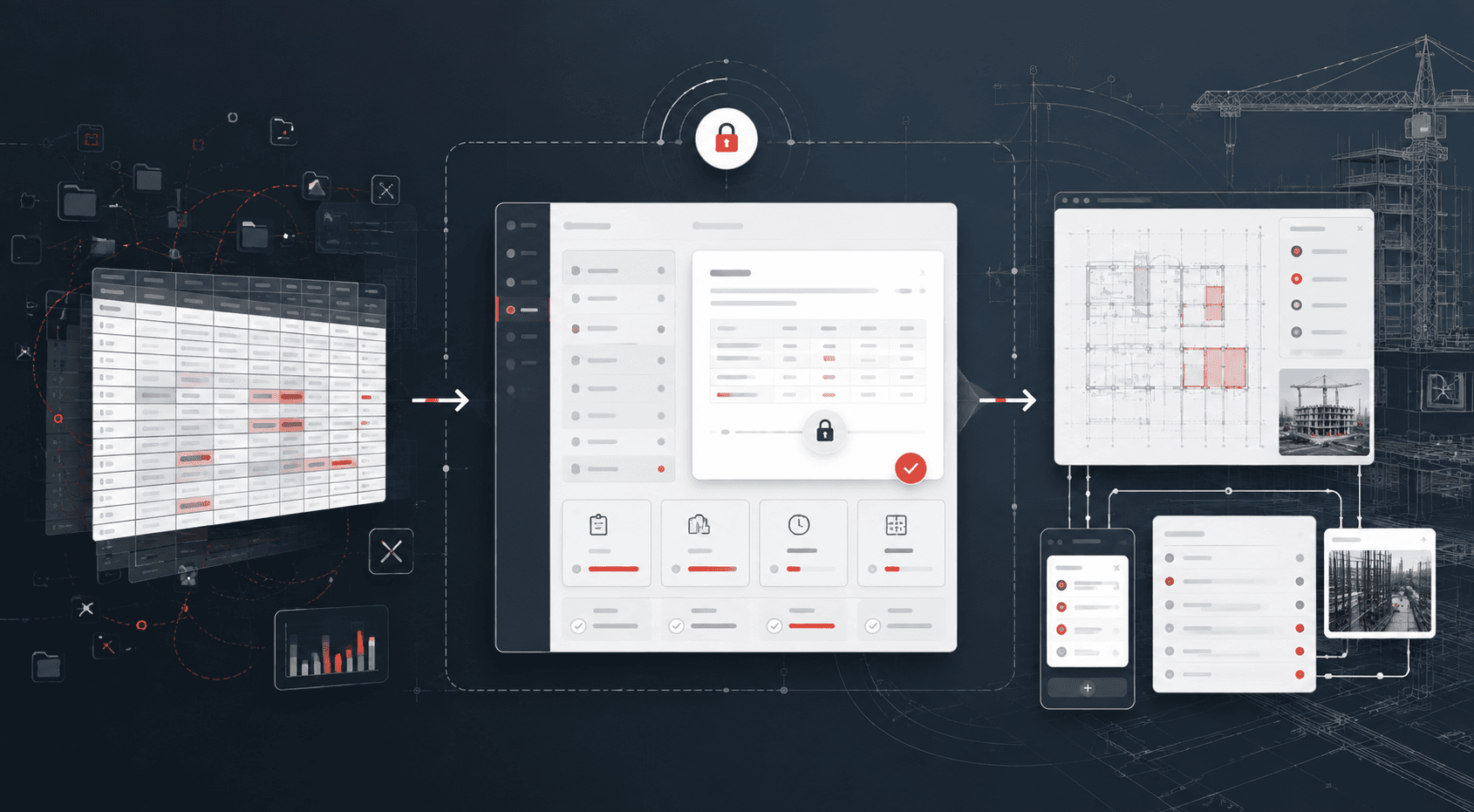
Most manufacturers we meet do not lack software. They have an ERP, CAD, accounting, maybe a warehouse system — and all of it works. What slows things down is usually the manual work between those systems, the steps that grew up around them as the company grew:
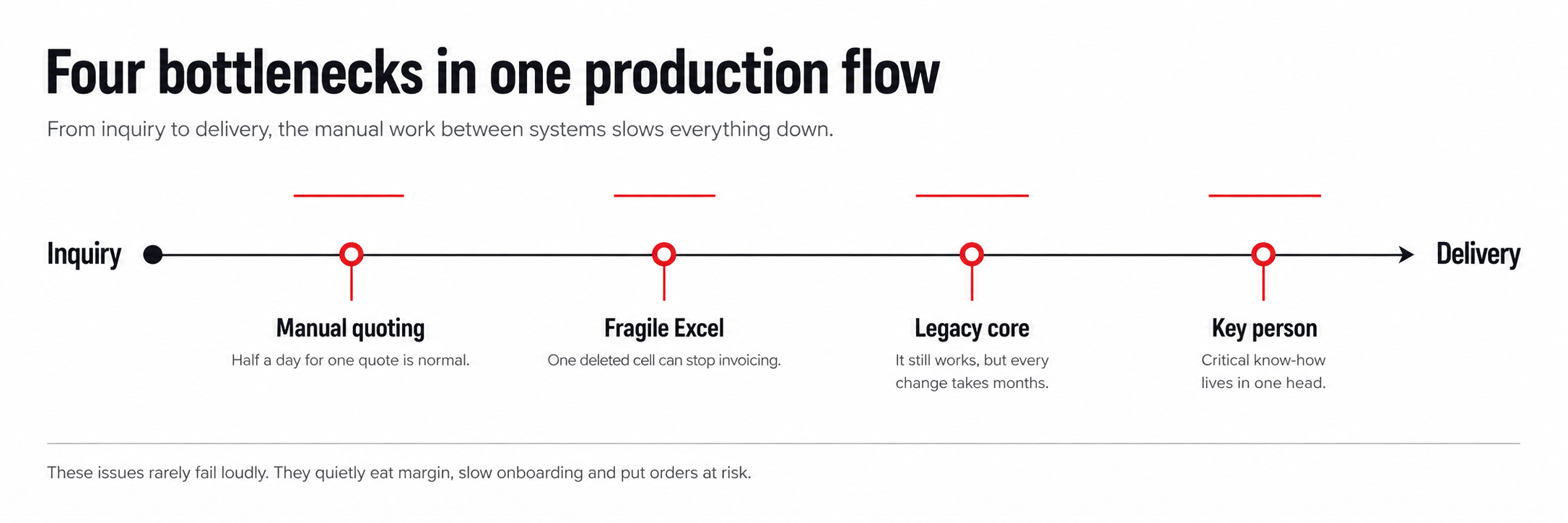
Quoting still needs manual work. An estimator opens the drawing, measures it piece by piece, notes the numbers and types them into a spreadsheet. Half a day for one quote is common, which makes preparing offers expensive — especially the ones that don't win.
A key spreadsheet has become part of the process. It started as a helpful workaround, grew over ten years, and by now few people feel comfortable touching the formulas. It works, but it asks for care.
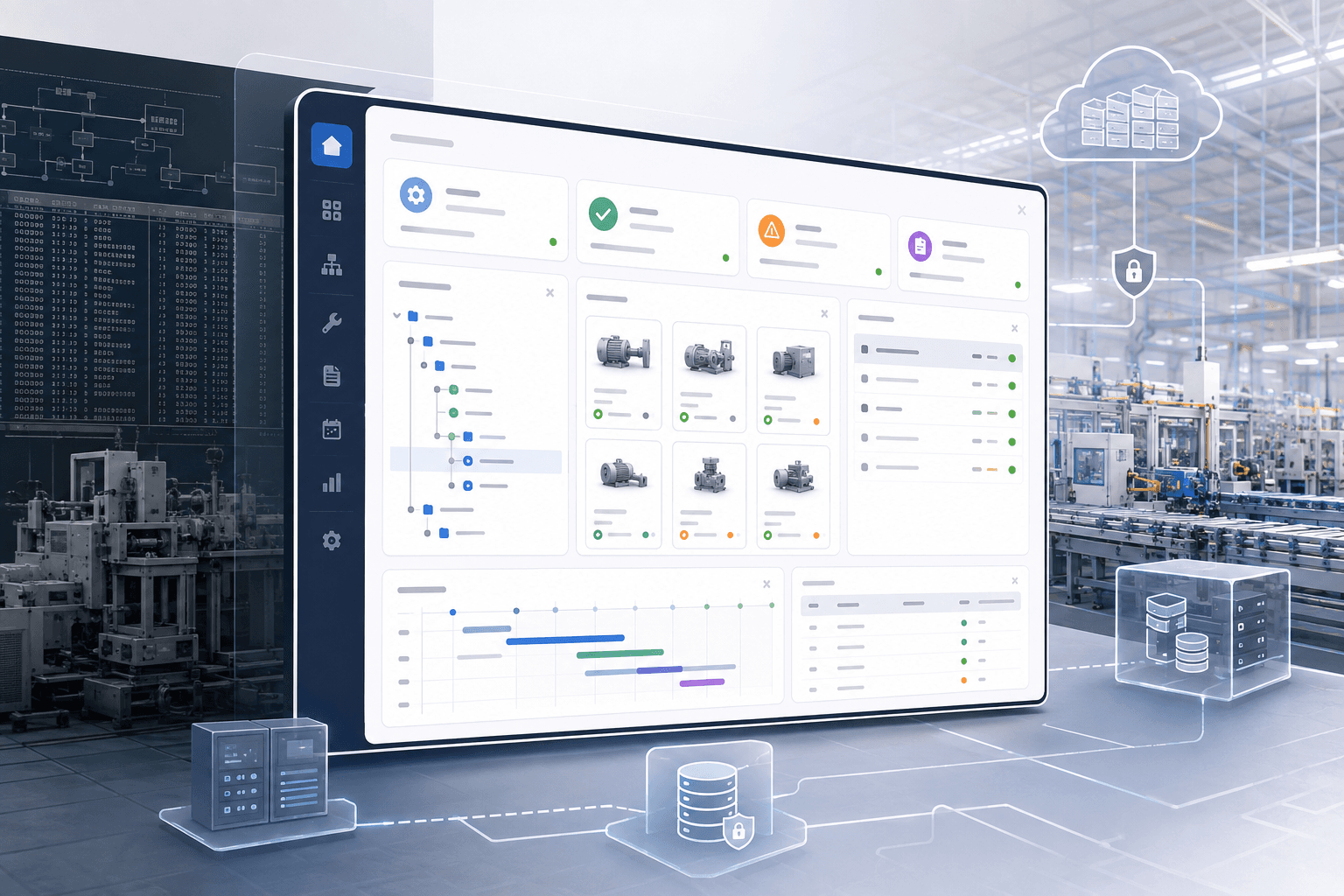
A core system still works, but is hard to change. It does its job, yet it cannot run on a tablet, few people want to maintain it, and every change takes months.
Critical know-how sits with one or two people. The estimator, the planner or the IT manager carries the method in their head. It works today, but it is hard to hand over.
These gaps rarely stop production overnight. What they do is slow quoting, make onboarding new people harder and create avoidable dependency on a few key colleagues. The good news: they are common, well understood, and solvable one at a time.
What We Build for Manufacturers
We do not arrive with one big system to replace everything. We look at the process with you, pick the bottleneck that costs the most, and remove it with a bounded piece of software that works alongside what you already run — one step at a time.
Quote and RFQ automation
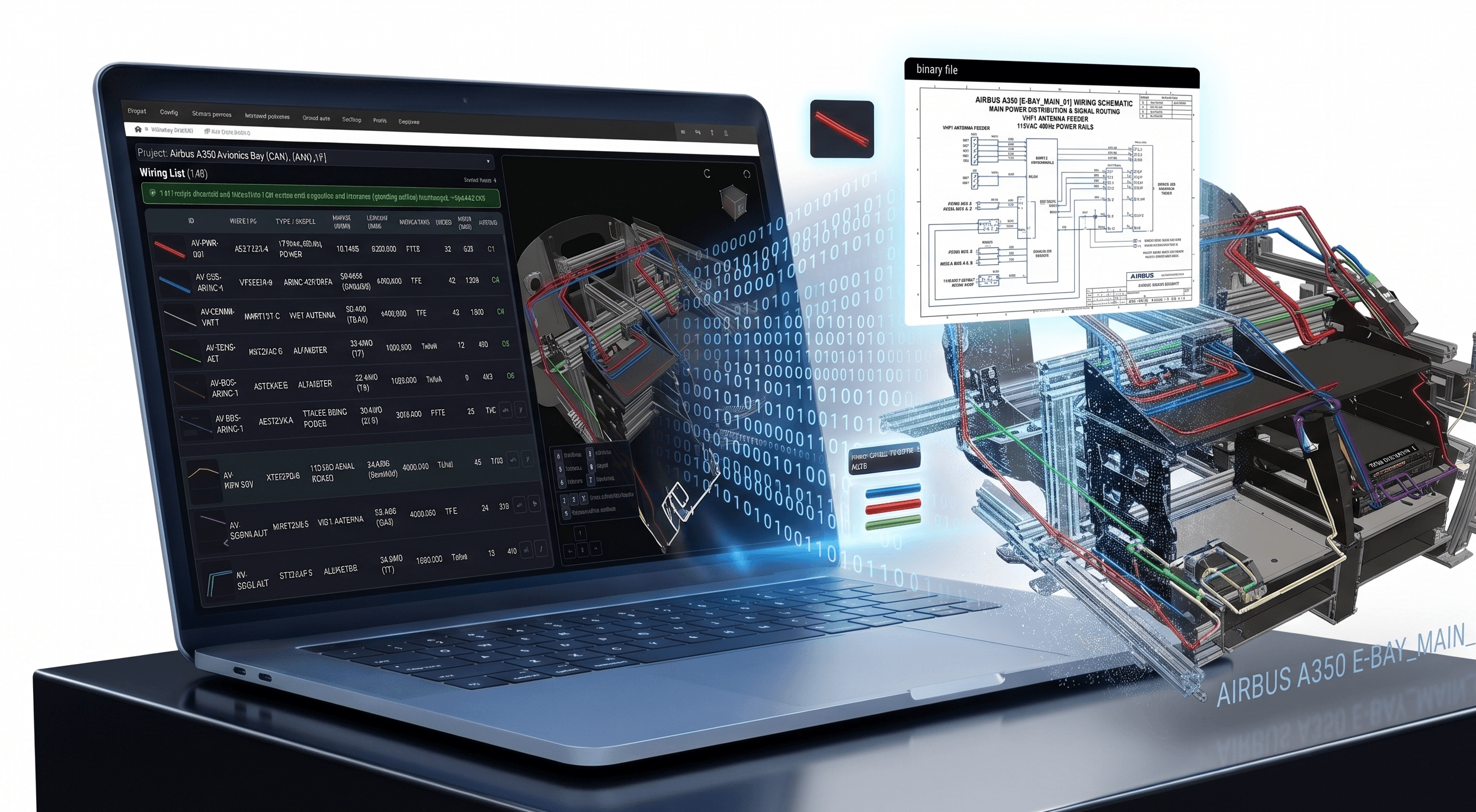
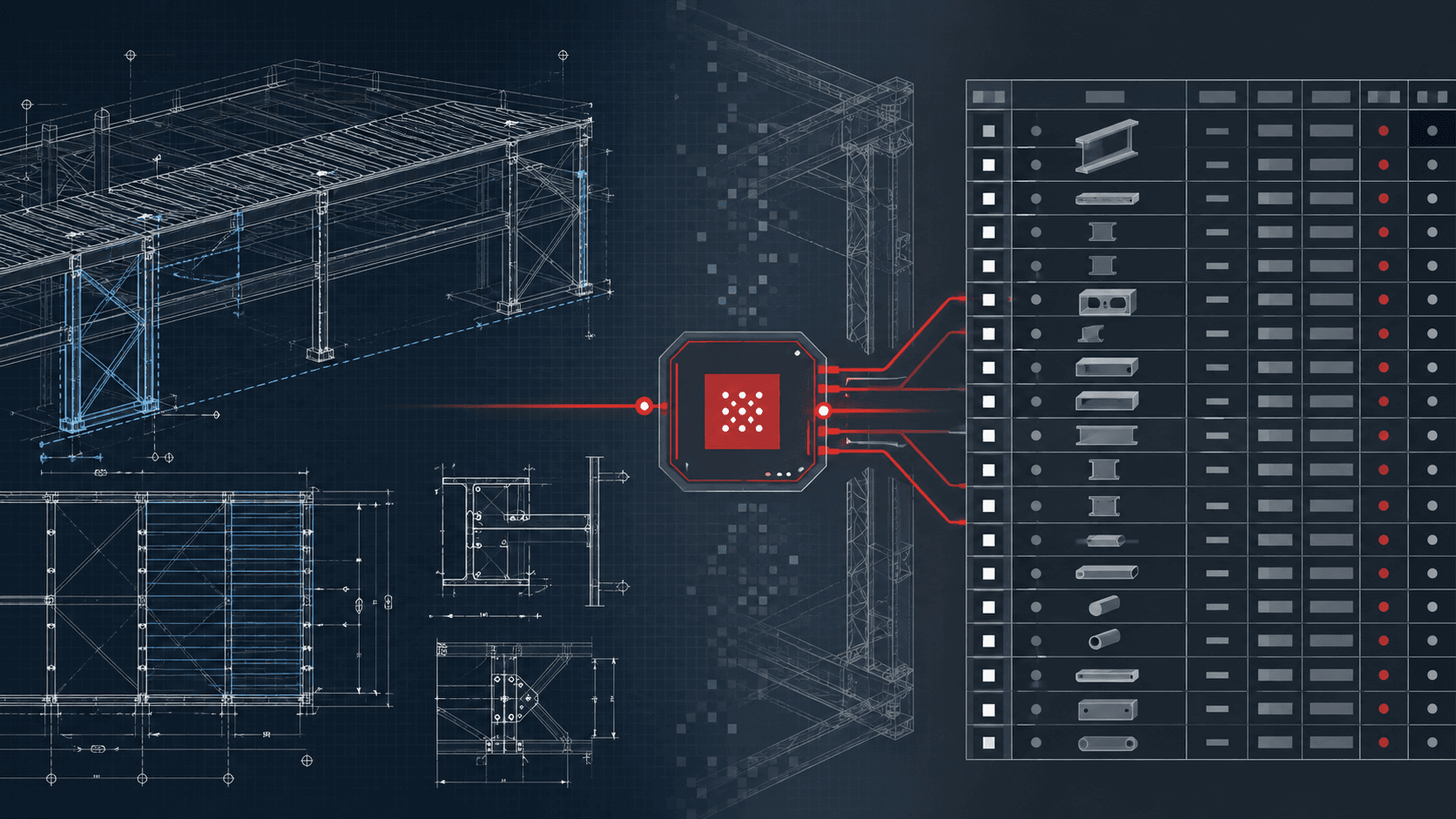
Software that can read your drawing data, apply your own calculation rules and produce a quote in minutes, depending on how your quoting works today. It can connect to your CAD formats (SolidWorks, STEP) and your ERP, so Helios or any other system stays the source of truth. For sales teams we also build 3D product configurators that let a customer configure a product and see the price without an engineer in the loop.
From Excel to a back office your team trusts
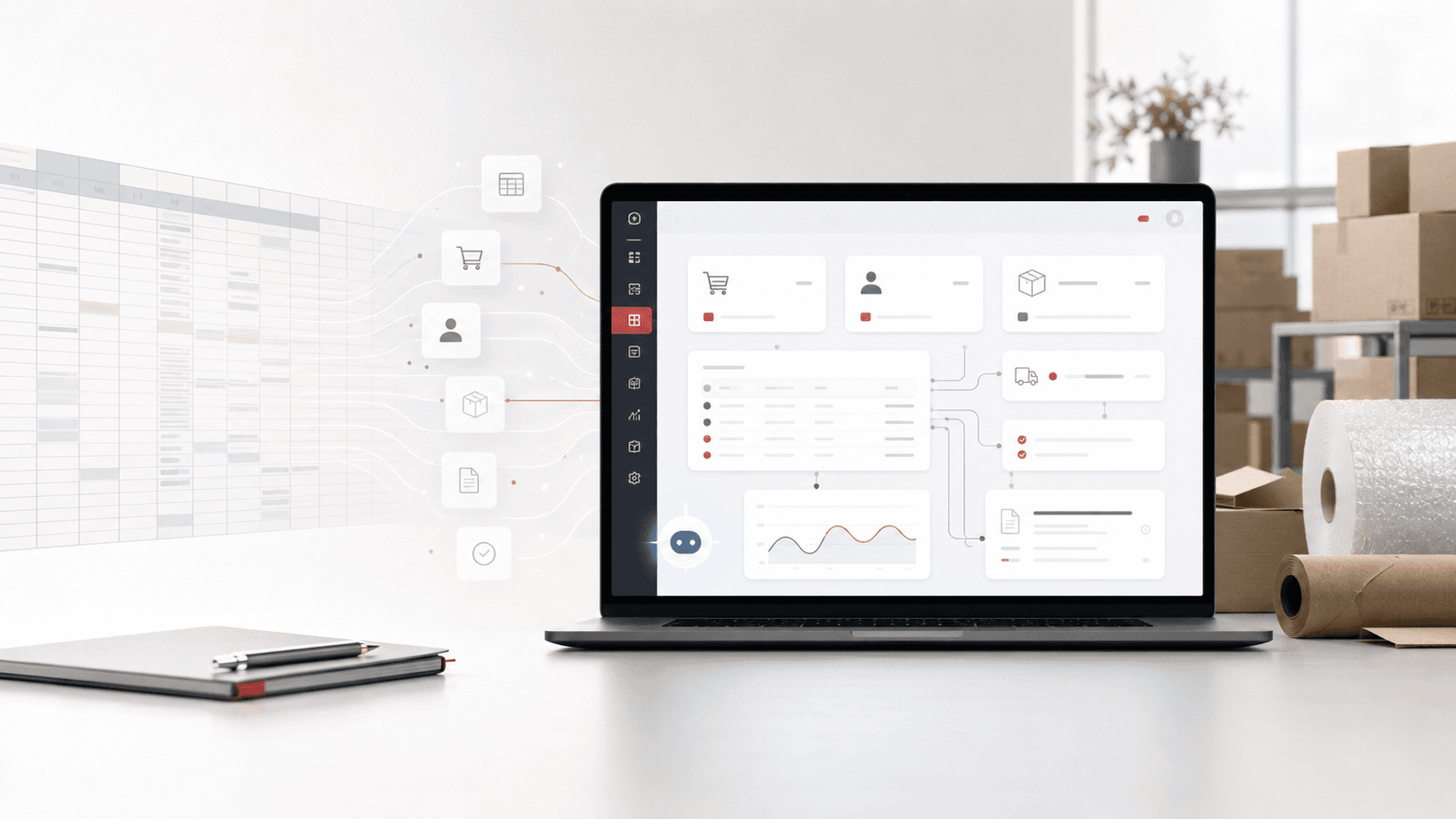
We turn critical spreadsheets into small internal systems: one source of truth, change history, fewer silent errors. Data is entered once and flows to orders, stock and invoicing — the process stays yours, it just becomes easier to repeat and hand over. See migration from Excel to a custom system.
Legacy system rescue
When the system that runs production is older but cannot simply be switched off, we modernize it in phases. The business keeps running the whole time, each phase is a controlled step, and you can fall back to the old system at every stage.
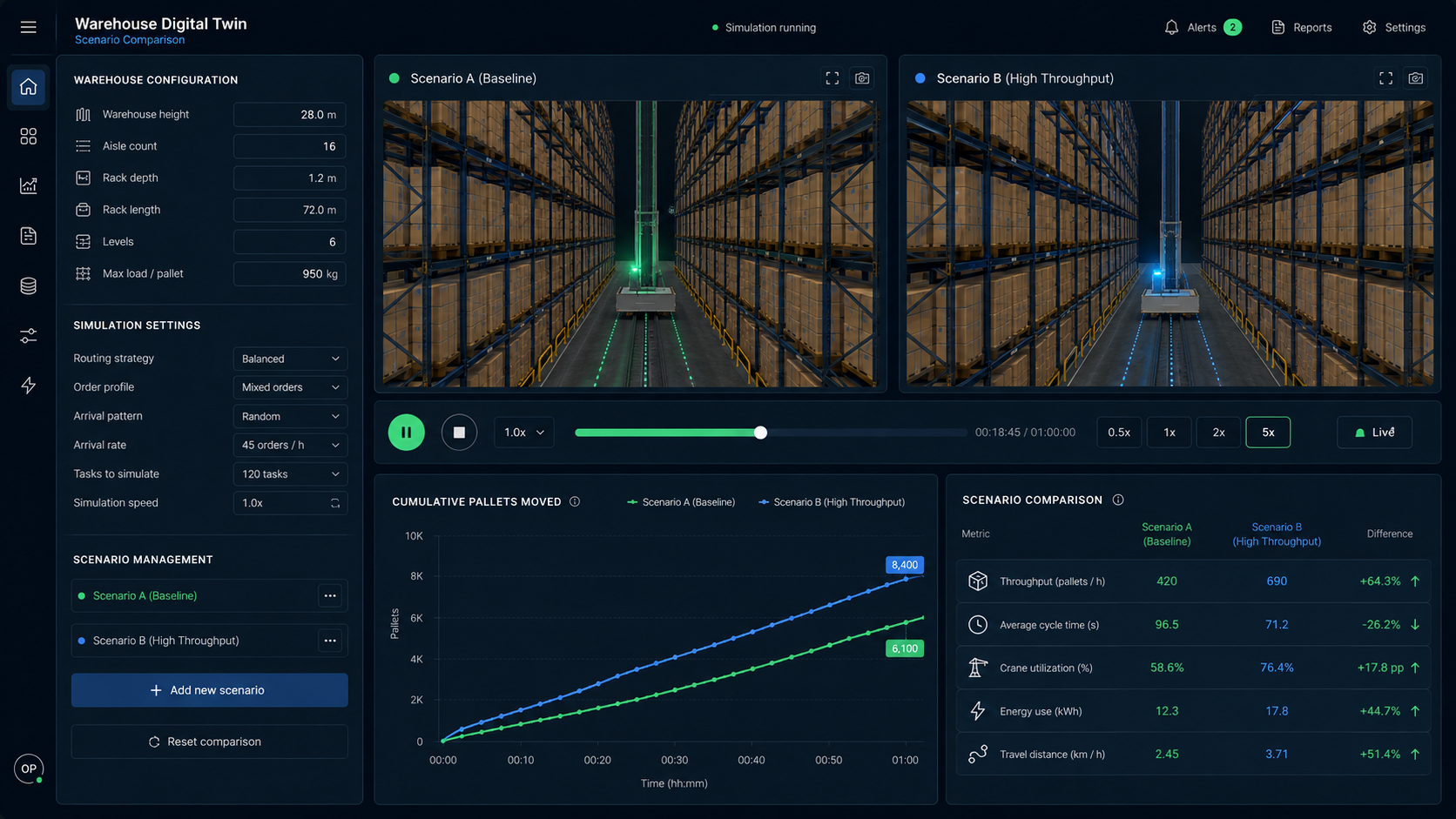
Digital twin and intralogistics
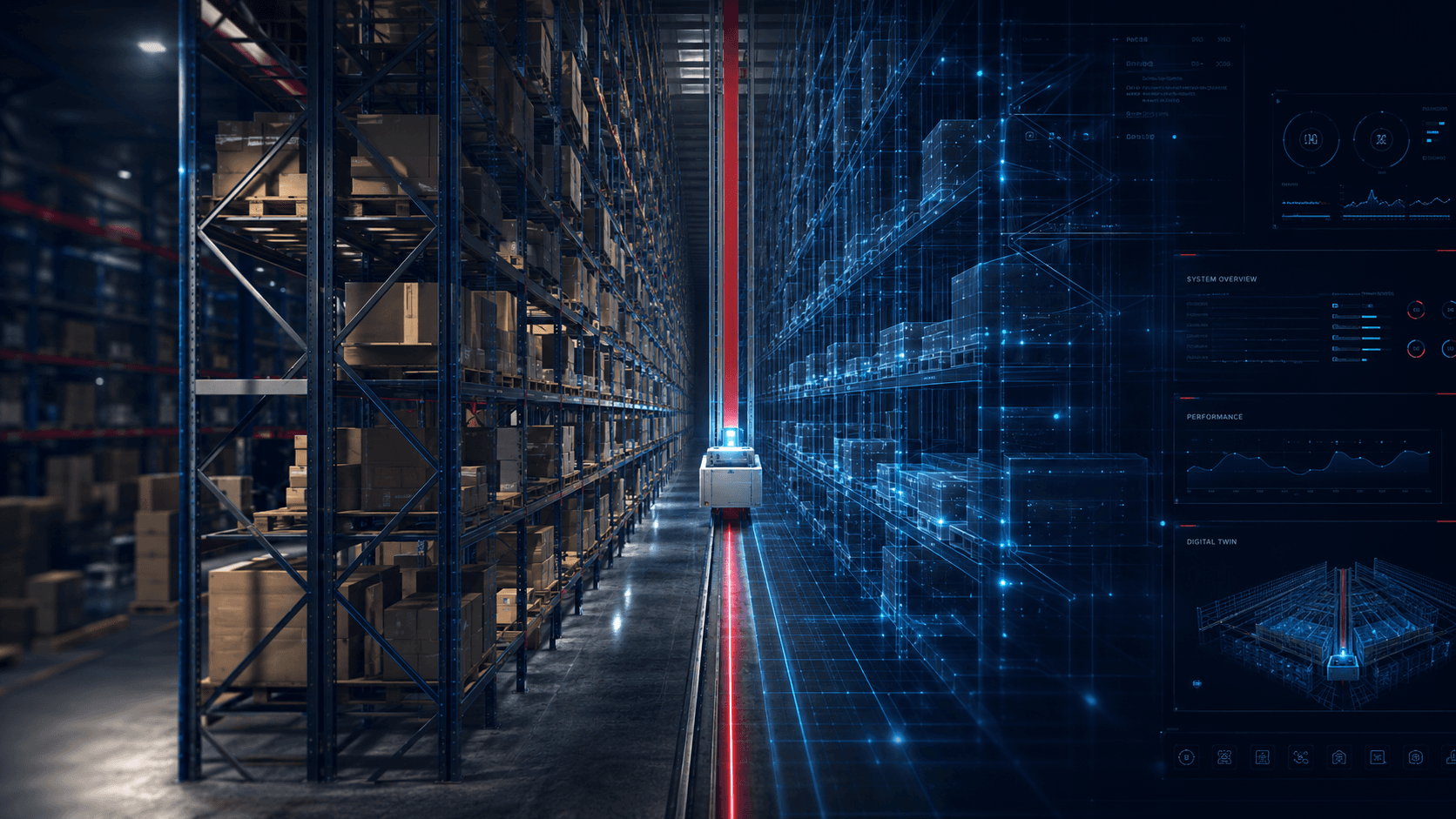
A virtual model of your line or warehouse that shows what is happening now and what happens if you change the layout, the shift plan or the buffer sizes.
Where Automation and AI Make Sense (and Where They Don't)
An honest answer first: most of what saves money in a plant is plain calculation you can audit. Your rules, your prices, your output norms, applied consistently and fast. There is a process behind it that meets a standard, and every result can be checked.
AI earns its place in narrow spots: reading messy tender PDFs, matching a new inquiry to similar past orders, spotting anomalies in sensor data. Even there we build it as one swappable component. The system runs without it, and the AI part can be exchanged in about an hour.
And if AI does not make the process safer, faster or easier to audit, we recommend a simpler approach — on a shop floor, a tool your auditor can follow is worth more than a clever one they can't.
How We Work
Process mapping first. Before we write any code, we sit down with the people who actually run the process, on the floor. The process in the manual is usually a little different — and that difference is where the useful software lives.
A small first step. We propose one bounded piece with clear value. You can review what it delivered after the first step, before deciding what comes next.
Fixed price, fixed scope, warranty. You know the cost before we start. No open-ended billing.
The code is 100% yours. Including the git repository. There are no licence fees, and you can continue with your own team or another supplier at any time, with everything in hand.
On-prem where it matters. Customer drawings are IP. If your data must not leave the building, the software runs on your servers, and you choose where any cloud stands.
Results From Recent Manufacturing Projects
From half a day to about 15 minutes per quote. A Czech wire-parts manufacturer quoted every frame by hand. After we automated the calculation over their CAD and ERP data, quoting one frame takes about 15 minutes, as reported by the client.
First working version in 3 weeks. A Swiss maintenance-software company came to us with a legacy platform. Three weeks after the architecture work started, the first working version of the new system was running.
From about 2 days to about 2 hours. A Czech custom-furniture maker received an 80-drawing tender. Breaking it down for pricing took about two days by hand. With the automated breakdown, the client states it takes about two hours.