

Migration from Excel to a Custom CRM
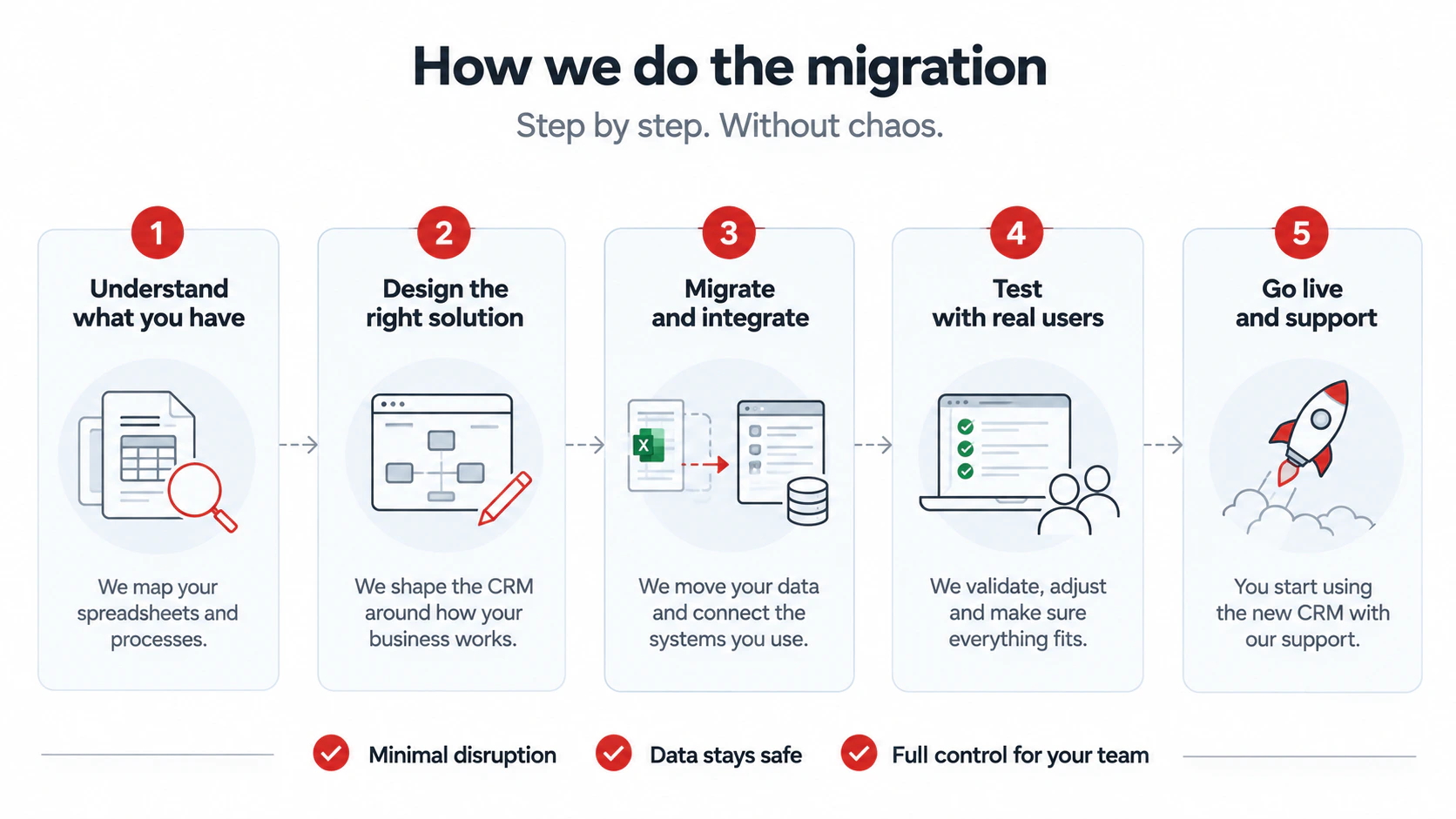
Moving off spreadsheets is work our team has done many times, and it starts with your business rather than with your files. We go through how you actually work — what gets quoted, ordered, approved and chased — and build a custom CRM around that. Your history comes across, your people keep working, and nothing is switched off until its replacement has been running.
What our team has already solved moving companies from Excel to a custom CRM
Based on our experience, this move is safe when it is done in the right order, and our team has done it often enough to know that order. Three examples we can describe:
A roofing and assembly contractor priced every project in spreadsheets that had grown for years and that only their author could safely touch. A quote is now assembled from current purchase prices, locked the moment it is approved, and becomes the live project with one click — with material orders, assembly tracking and the legally required site diary in the same place.
A distribution company working across CEE markets ran order workflows for several teams and locations out of files. They moved to one custom web application built around their own process, which saved time and cut the errors that came with the manual steps.
A B2B packaging supplier kept orders moving in spreadsheets until the sheets became the ceiling. Our team built an order-management system around their real process and added an AI assistant where it made sense. A year later they came back to extend it.
None of these companies stopped working while it happened.
When a spreadsheet has outgrown its job
You will probably recognise some of these:
Everyone works in their own copy, and nobody is sure which one is current.
The formula that prices a job is understood by one person, and they are on holiday.
Nothing records who changed what, when, or why.
A question — where is this order, what did we quote them last year — takes three files and a phone call.
The file has grown so large that it is slow to open and slow to save.
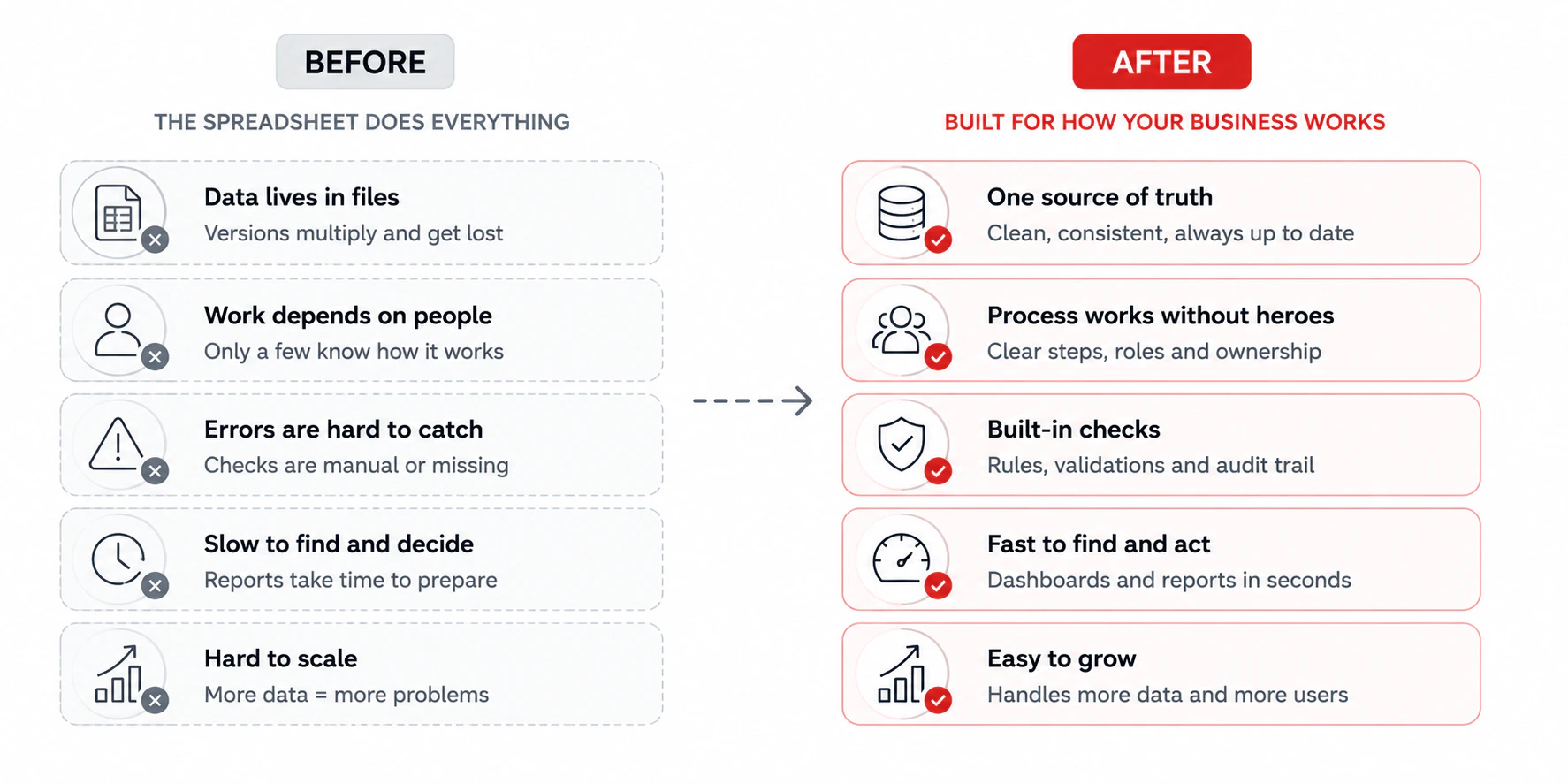
How the move from Excel to a custom CRM works
We start with your business and the way it runs, rather than with the file. Our team goes through the process with the people who do the work, and reads the spreadsheet against what they describe. In most projects that turns up two things at once: tabs and columns nobody needs any more, and information the business depends on that was never recorded anywhere.
The process comes first. Thirty minutes on a screen-share is usually enough to see which parts of the file are the process and which parts are workarounds.
Your history comes across. Customers, quotes, orders, and the notes people typed in the margins.
You keep working while it happens. The first piece covers one process and goes live on its own. Nothing is switched off until its replacement has been running.
The rules get written down. The discount nobody documented, the customer who is always billed differently, the step that has to happen before a job is released.
You talk to the people who build it. Our developers have 20+ years of writing software behind them, and they stay your technology partner after the move.
Sometimes Excel stays
In some projects the right answer is to keep the spreadsheet. A specialist calculation, a file a partner insists on, a model your finance team has refined for years — there is little to gain from rebuilding those.
What our team does instead is connect them properly. The spreadsheet takes its numbers from one source instead of six, what it produces goes back into the system without retyping, and the steps inside it get tidied to match how the business actually works. Export and import stay, and the monthly report your finance team builds in Excel keeps being built in Excel.
Let’s look at your process, whatever state it is in
Our team has moved spreadsheets in every condition you can imagine, including the ones their owners were embarrassed to open. None of them turned out to be a problem — this is ordinary work for us, and we are good at it.
Start with a free consultation, or invite us for a strategy session at your office. We come with one of our developers and spend the day with both sides of the work: the people who use the file every day, and the people who own the process and answer for it. You are left with an audit of how the work runs today, a written plan for the move, and a fixed price for the first piece. We work under NDA from the first call. If we conclude that you should keep the spreadsheet as it is, we will say so — being straight with you is worth more to us than one project.
If you are also weighing a standard product, we set out when to buy and when to build on our custom CRM development page.
Related Projects
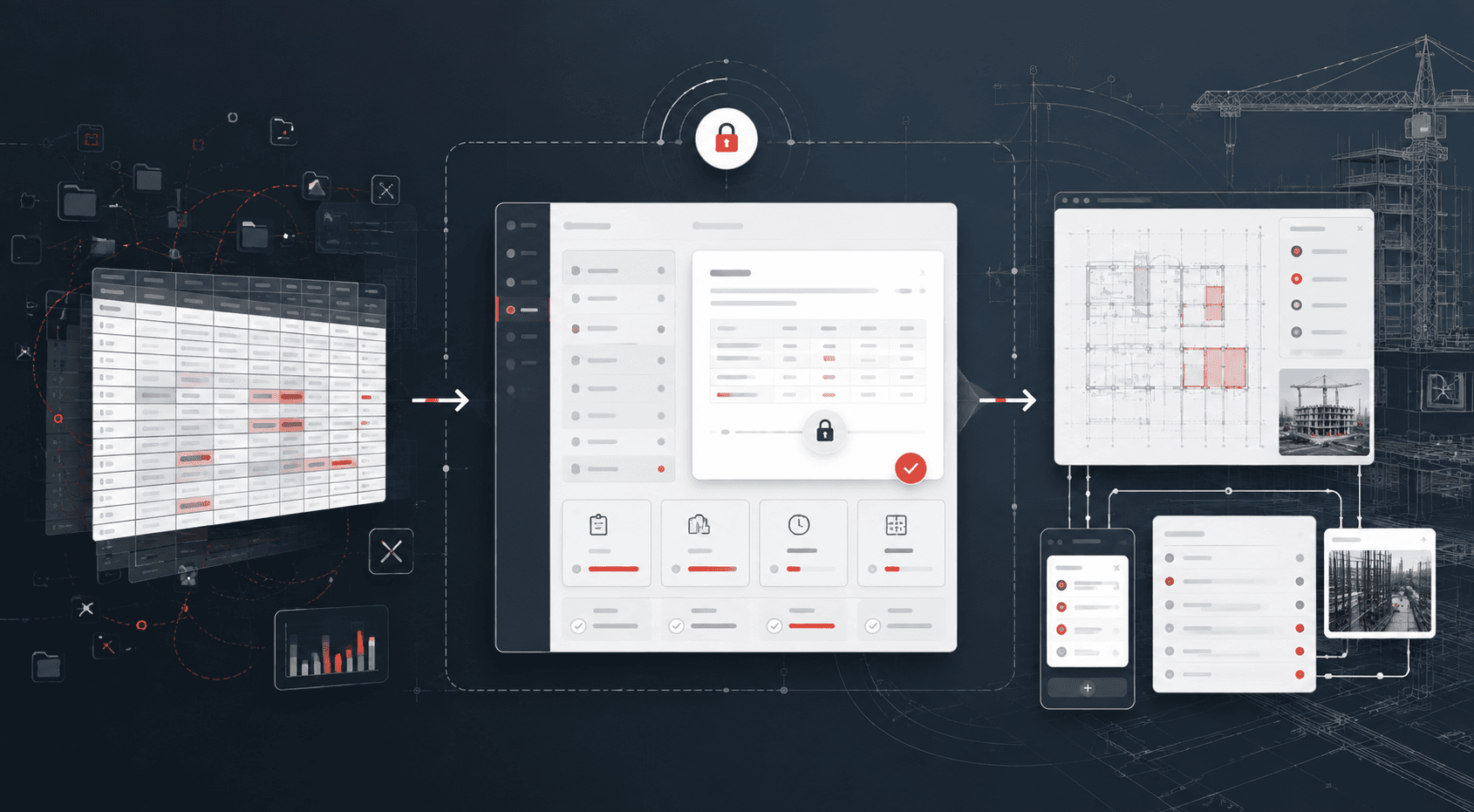
Quoting Software for a Roofing Contractor That Outgrew Excel
A European roofing and assembly contractor priced every project in spreadsheets that had grown for years and that only their author could safely touch. Today a quote is assembled from the latest purchase prices, locked the moment it is approved, and turns into the live project with one click — material orders, assembly tracking and the legally required site diary included.
View Case Study
From Excel Sheets to Fully Customized Solution Prepared for Years to Come
A fast-growing distribution company operating in CEE markets needed a way to fully manage order workflows and processes across different teams and locations, add features to increase throughput and digitalize the whole company. Moravio stepped in to build a custom web application that makes work easier and more enjoyable, saves time, reduces errors, and finally helps the company increase their revenue.
View Case Study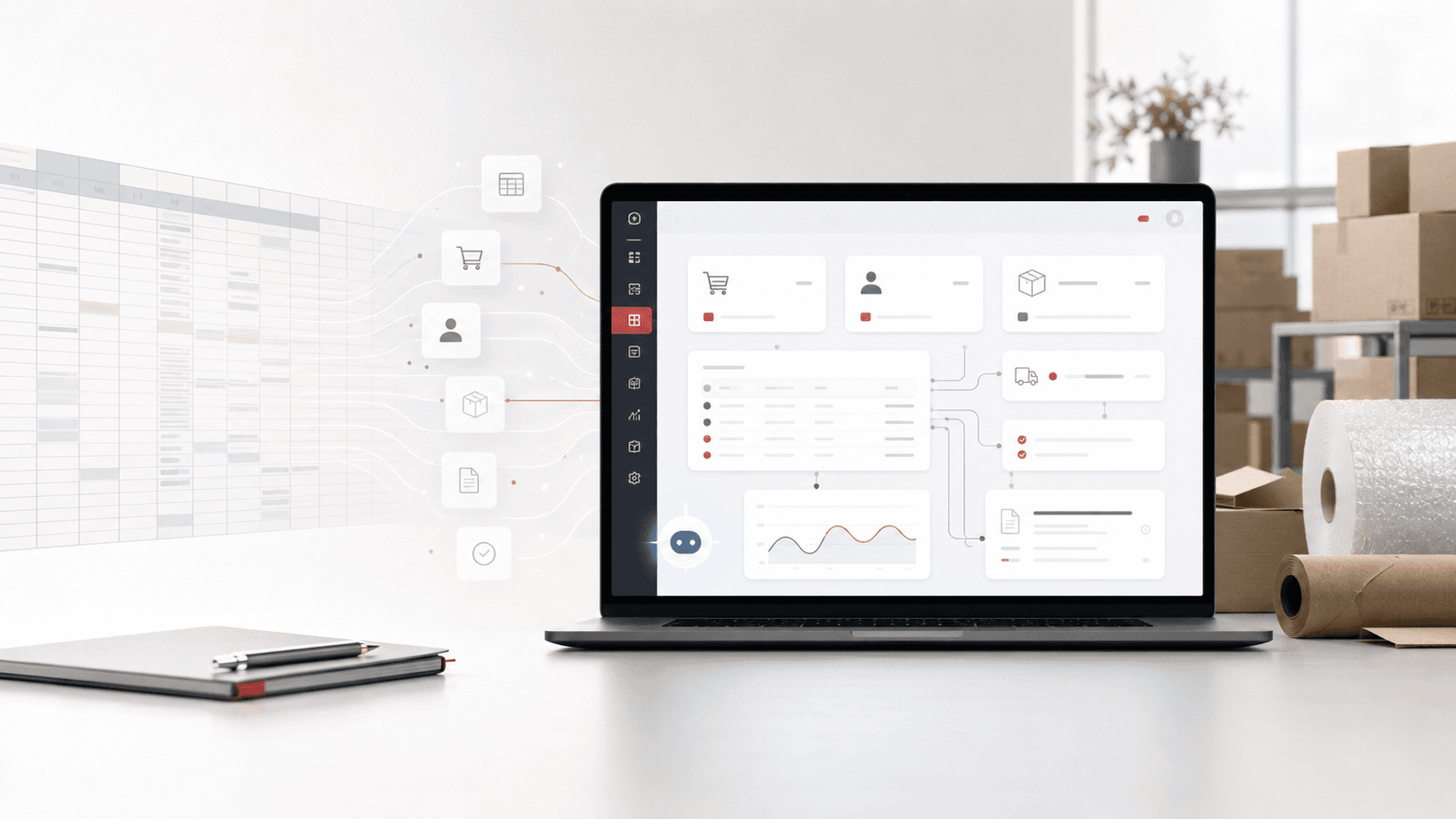
From Excel to a system that runs the orders
For years spreadsheets kept a Czech B2B packaging supplier's orders moving — until they became the ceiling. We built a custom order-management system around their real process, added an AI assistant where it made sense, and a year later they came back to extend it.
View Case StudyFrequently Asked Questions
More context helps
Describe the situation
A few useful details help us prepare: who is affected, how the work happens today, what has already been tried, and why this matters now.