

A digital twin for automated warehouses: the numbers before the investment
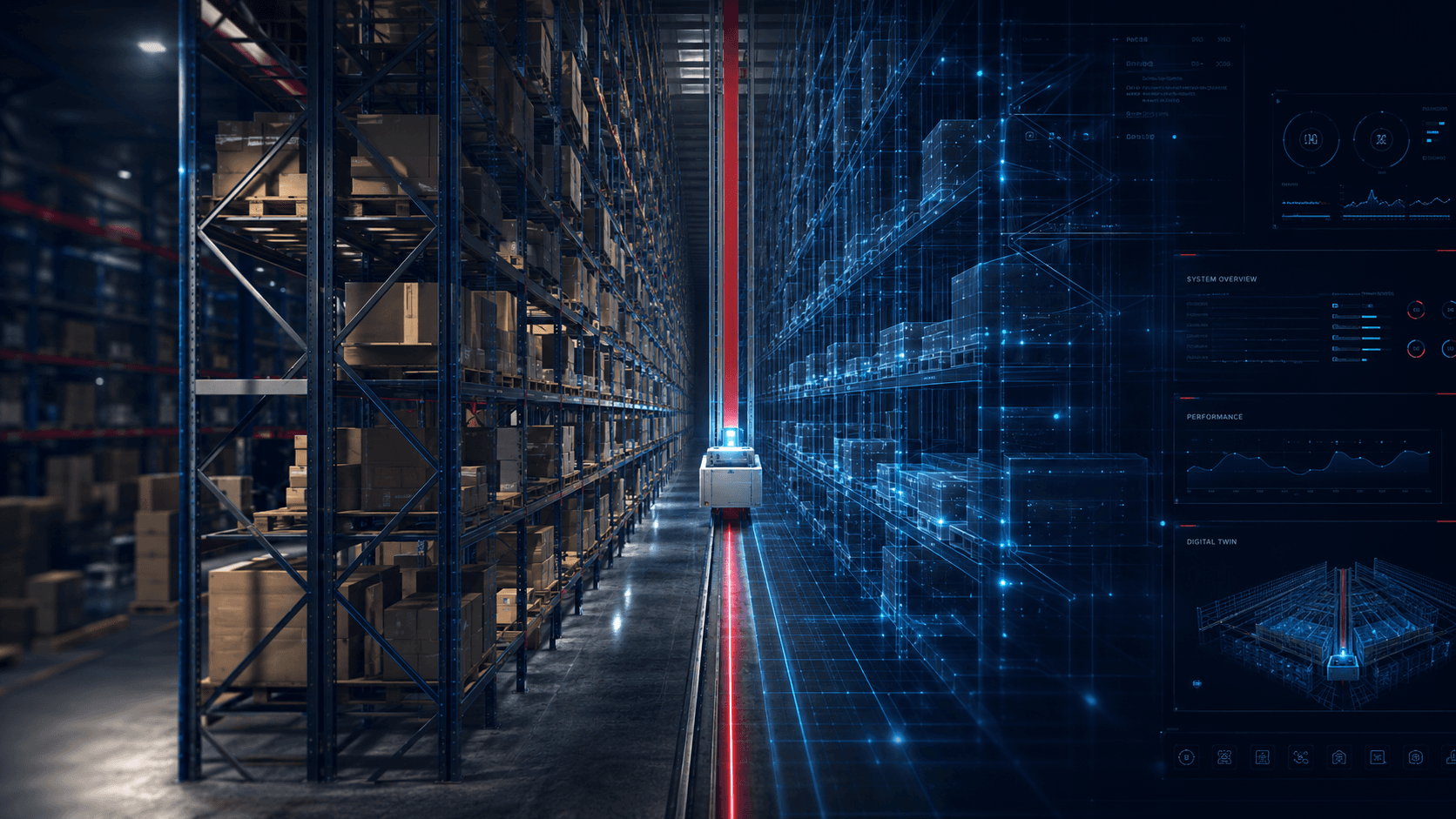
Four aisles or five? One crane or two? A different picking strategy? A European manufacturer of automated warehouse systems can now test these decisions in a simulation and read the answer in pallets per hour — before a single rack is ordered.

This client operates under a strict NDA. We respect their privacy and protect their business secrets, so we can’t share details about the project.
Client context
A European machine builder that designs and manufactures fully automatic stacker cranes for intralogistics — storing and moving pallets and containers inside warehouses. Mechanics, electrics, automation and software are all developed in-house. The company has been refining the technology for over fifteen years.
The real problem
Every offer this company makes hangs on one number: how many pallets per hour will the system do in this specific warehouse.
That number is physics. It depends on how the crane accelerates under load, how it brakes, how long the rotation takes, how far it travels on each axis, and how the picking strategy orders the work. Multiply that over thousands of cycles and a full shift, and no spreadsheet holds it. So the number gets estimated by experience. And when the question changes — a different layout, a different strategy, a possible hardware upgrade — the estimate starts from scratch.
The same gap shows up after the sale. An automated crane that stands still costs real money every hour. Deciding when to replace a wearing part is the same kind of question: expensive to answer by guessing, cheap to answer with a model.
Where we started
Before building anything, we worked through how the machine actually operates: the movement axes, the rotation around the mast, the load and unload cycle, the working envelope — 22 metres of height, runs over 50 metres of track, payloads up to 2,700 kilograms. The simulation had to respect the real machine, or its numbers would be worthless. This step is where most of the effort went, and it is the step we never skip.
What we built
A digital twin of the warehouse and its crane, delivered as a small, fixed-scope first step:
A warehouse configurator. Enter aisles, rack height and dimensions, and get that warehouse as a 3D model with the crane inside.
A simulation core that is plain calculation. Physics formulas for acceleration, travel and braking on every axis, plus rotation and handling times, summed over a full shift. There is no AI making the numbers. Every result can be traced back to the formula that produced it and checked by your own engineers.
A 3D view for the sales conversation: the customer sees their own warehouse running, and the figures next to it come from the same calculation.
Strategy comparison. Run the identical warehouse under two operating strategies and read the throughput difference directly.
A maintenance module. The twin produces telemetry the way a real crane would. Seed a wearing bearing into the model and compare three maintenance approaches — run to failure, fixed schedule, or condition-based — side by side, in euros.
Hardware what-ifs. Add a second carriage to the crane in the model and see the throughput gain before any steel is cut.
The twin sits alongside the systems the company already runs. Nothing is replaced. It can run on the company's own server, the data stays in-house, and the code belongs to the client — no licences, no lock-in.
The results — simulation outputs, clearly labelled
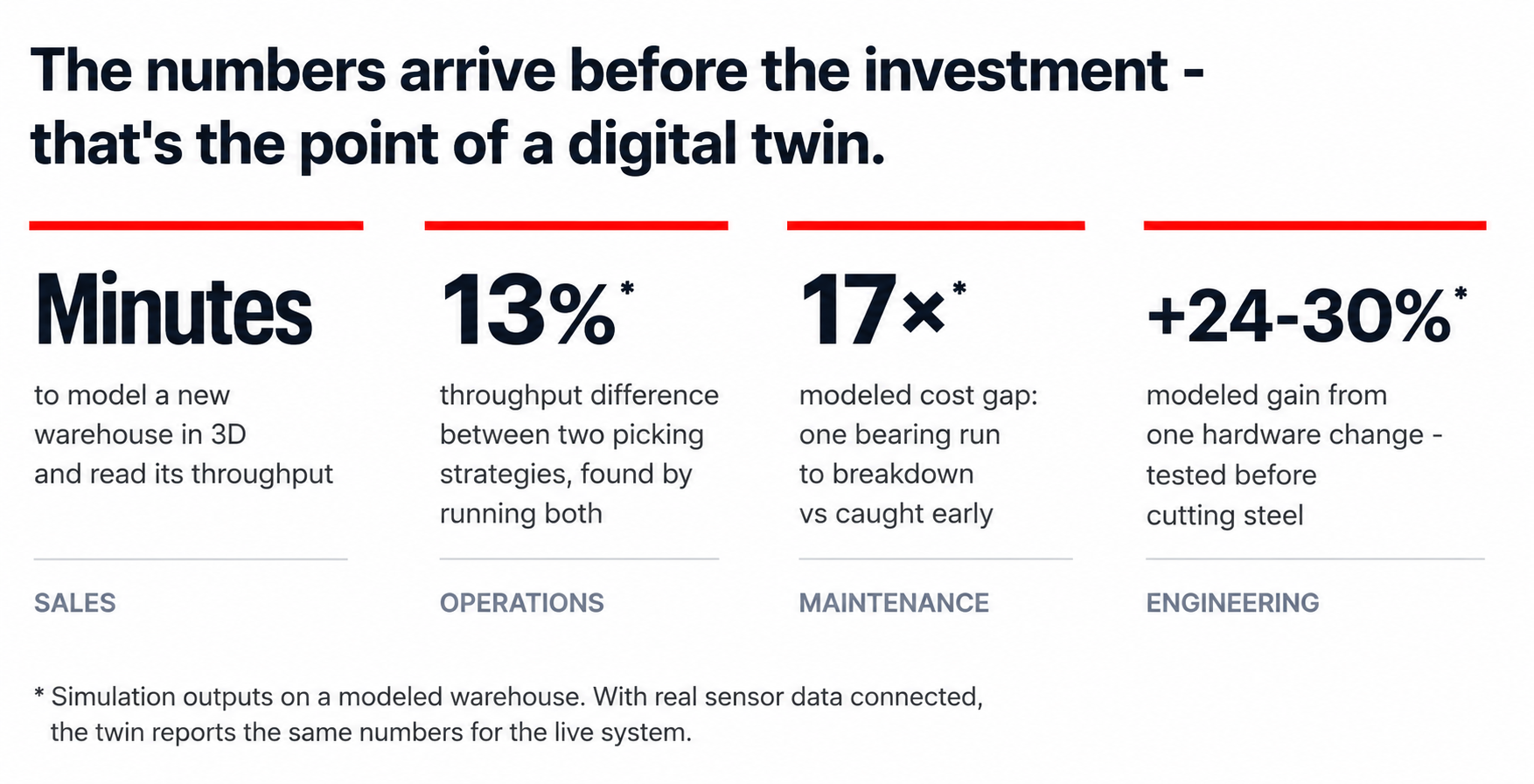
The point of a twin is that the numbers arrive before the investment. From the simulated scenarios:
A new warehouse layout is modeled and measured in minutes, during the sales conversation, instead of days of manual estimation.
13% throughput difference between two picking strategies on the same warehouse — found by running both and comparing.
17× cheaper to replace a bearing before it fails than after it stops the crane. The model prices every hour the crane stands still, so the cost of downtime stops being a guess.
+24–30% modeled throughput from one hardware change, evaluated without building a prototype.
What we learned
A twin is only as honest as its data. The first version ran on modeled telemetry, and we said so plainly: the figures above are simulation outputs, and they become operational truth only once real sensor data flows in. Whether the vibration sensors existed on the physical crane was an open question, and we flagged it ourselves rather than assume it. We also learned, again, that the software is the smaller half of the job. Most of the work was understanding the machine well enough that its owners could trust what the model told them.
A twin is not only for warehouses — where else this works
A warehouse and its crane are one case. The same approach works wherever the answer is physics and geometry. A machine or a whole production line can be modeled in 3D and run before it is rebuilt or before a second one is bought. A part can be checked against the tooling that has to make it. Packing can be worked out in advance: how the frames fit into a box, the boxes onto a pallet, the pallets into a truck, seen in 3D before anything is loaded. If your question is how many, how fast, or will it fit — it can be answered on the "digital twin" model instead of on the real thing.
Building a model like this used to be a project in itself. That has changed: the tooling has moved far enough that a first working simulation of your line, machine or warehouse takes a couple of weeks, and you get numbers you can check. Thinking about one? Book a call with our team.
These images were modified to comply with the client's NDA. The software interface remains unchanged.
Technologies
 WebGL
WebGL Python
 Docker
 React
React TypeScript
Featured Case Studies
Projects that might be interesting to you
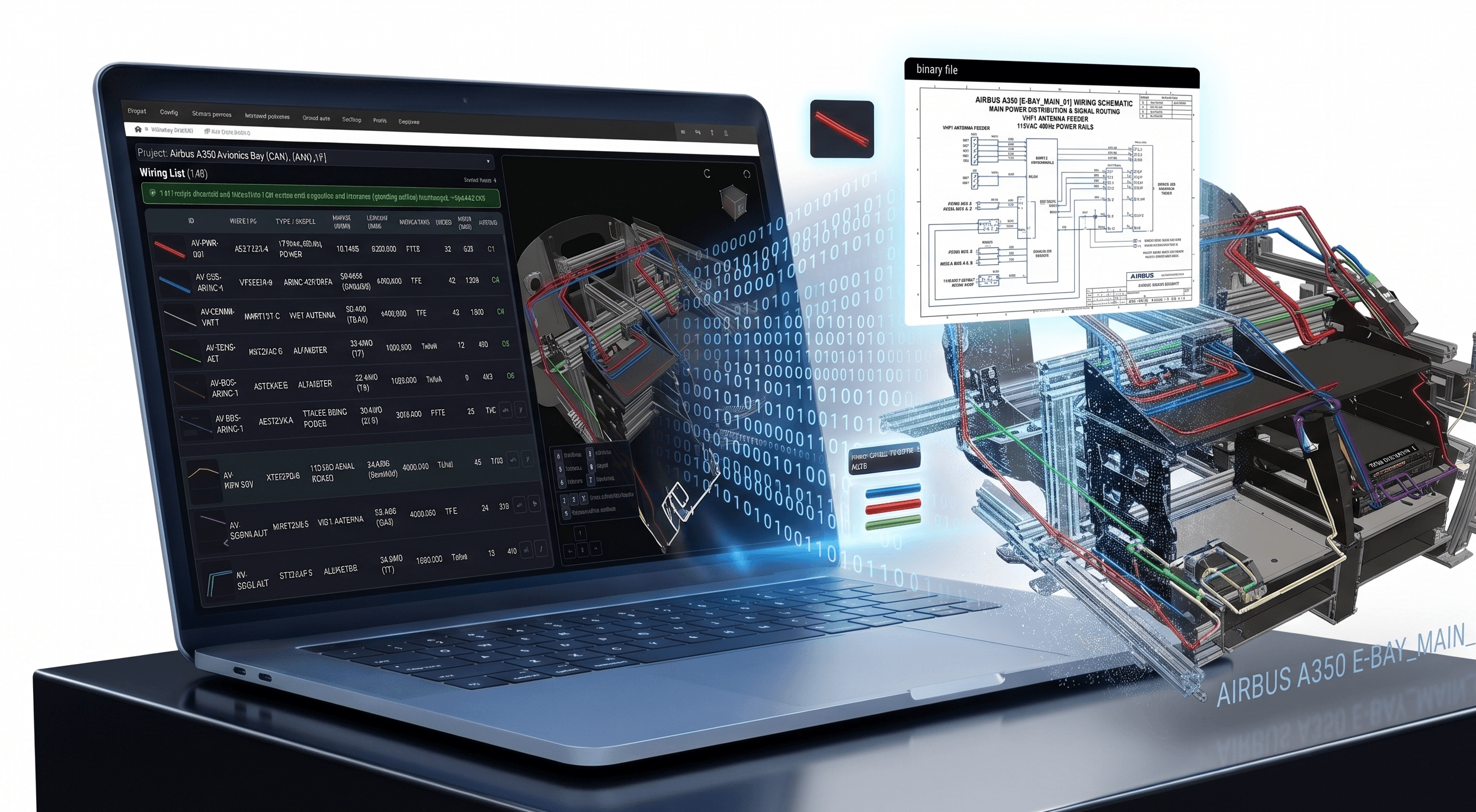
Quoting wire frames: from half a day per frame to about 15 minutes
An automotive supplier that bends wire and welds seat frames now breaks down a new frame in about 15 minutes. Before, the same analysis took half a day to a full day of manual clicking per frame - and a project can carry twenty of them.
View Case Study
How we helped Nokia Bell Labs
Nokia Bell Labs is one of the world’s most prestigious research institutions, boasting a 100-year legacy of ground-breaking innovations. For Moravio, partnering with such a renowned organization was both an honor and a challenge. Our mission was to convert cutting-edge research into a fully functional product, while allowing the Nokia Bell Labs team to focus on what they do best - pushing the boundaries of innovation.
View Case Study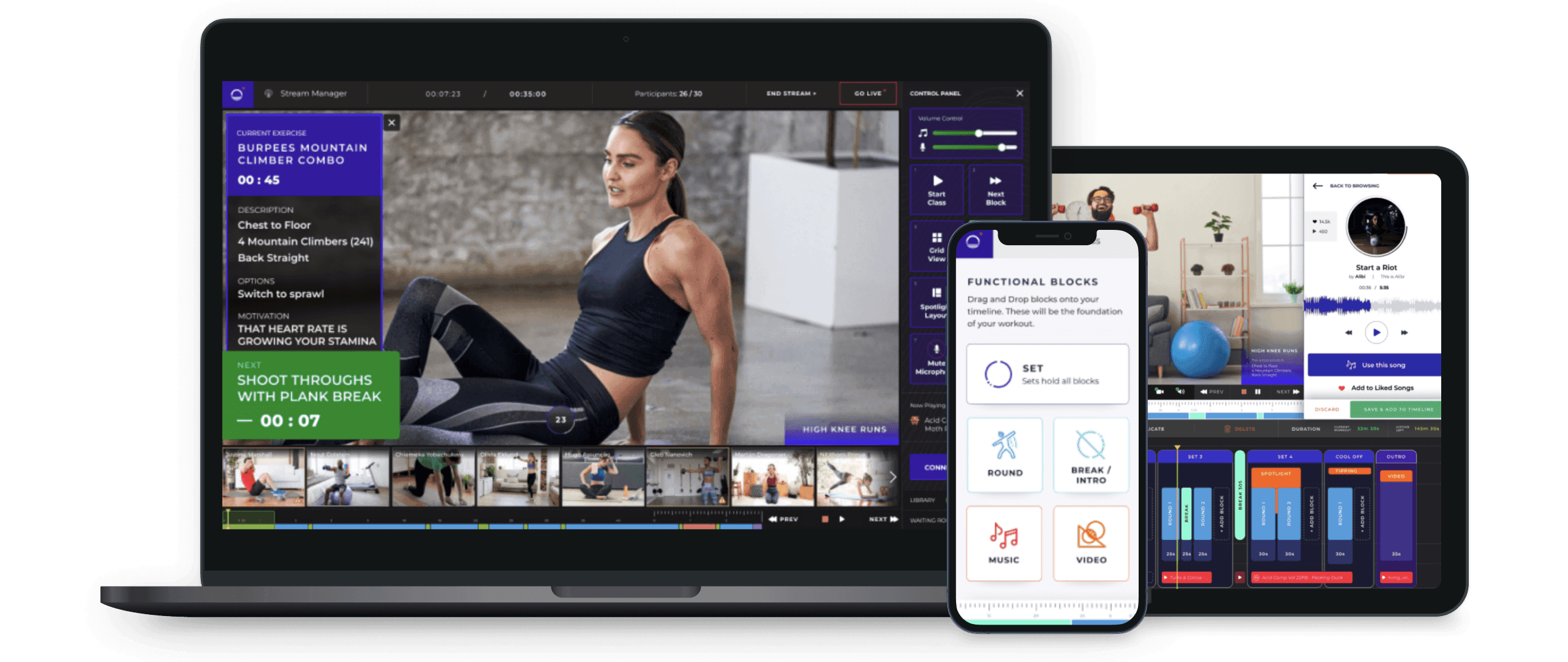
The Stardio live streaming platform : Live fitness experience
Stardio.com is an online platform for a live streaming of fitness classes. Trainers design lessons, invite an audience and broadcast workouts live. Members can subscribe to the lessons of their choice.
View Case Study








More context helps
Describe the situation
A few useful details help us prepare: who is affected, how the work happens today, what has already been tried, and why this matters now.