

When ATS Stops Helping: Why Custom Recruiting Software Makes Sense
Incredibly valuable insights from Barbora Thornton, based on real work with recruitment companies. An overview of when ATS (Applicant Tracking System) begin to limit workflows, slow hiring processes, create data challenges, and what companies can do to solve these problems.


On this page(9)
- Workflow insufficiency
- One package, 70 % rubbish
- Core Risks of SaaS ATS Systems for Recruiting Agencies
- Scaling might be difficult - and pricey
- ATS for compliance, spreadsheets for the real work - reality of recruitment and software cohabitation
- Why custom?
- Do you already have a custom ATS system? Read this first
- When you don’t need the custom solution
- Key takeaway
Recruitment agencies are on an up and up. The market requires permanent and temporary staffing on demand more and more; hiring the “old way” is mainly for small and medium companies, commitments they can’t afford, as well as their own recruitment, HR or retention departments.
And all agencies providing workforce on demand need ATS or HR management systems. There are not many fields as saturated with off-the-shelf products as this one.
And yet - agencies still use spreadsheets or rather expensive custom SaaS development. Why is that? Why is custom the way, even when you have so many tools to choose from?
Workflow insufficiency
Because processes are a trap.
The problem isn’t that agencies are choosing the wrong ATS. The problem is expecting standardized software to support fundamentally non-standardized recruitment businesses. Recruitment delivery models, candidate ownership logic, redeployment cycles, and compliance footprints differ so widely that even the best off-the-shelf platform eventually becomes a constraint rather than an enabler.
Talking about company processes creates an idea that we have some set rules for everything, we just need to follow them. The truth is, even for the same thing and to reach the same outcomes, all companies have their unique process.
According to people, their unique business edge, legacy, comfort, proven results, you name it, there can be a lot of reasons. Because the legal requirements and compliance are only a small part of each process. The biggest part is the unique part.
Recruiting differs by industry, location, compliance regime, outsourcing versus permanent staffing, market (global/local).
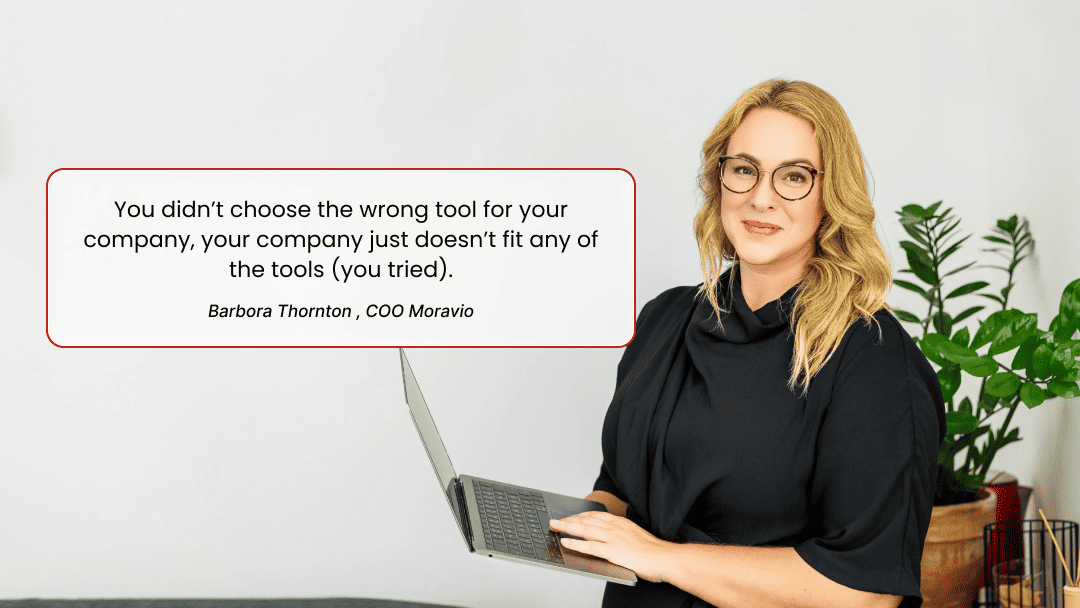
You didn’t choose the wrong tool for your company, your company just doesn’t fit any of the tools (you tried).
And that’s the first part of failing off-the-shelf tools. Software should follow the process, not the other way around. It can’t capture your unique workflow, and if it can, it requires so much customization that you actually end up with a new product. And you’ll pay as much.
And when you are already customizing - you are describing your own process. So why not use it as an instruction for your own system?
One package, 70 % rubbish
Another problem is that you’re buying a lot of things you won't use. If you are just a recruiting agency, you very likely don’t need asset management, performance reviews, internal HR modules, fleet management, merch warehouse, payroll management, admin modules, etc. Yet they are part of most ATS systems.
Of course, you don’t have to use them, but you already paid for them. So you might try to bend company processes according to the purchased tool to justify it. Is it really worth it?
When we need an applicant tracking system, we don’t need the whole ERP.
On top of that, systems can be powerful, but not exactly intuitive. Because of growing roadmaps and additional features, what a recruiter does in Excel in two clicks, in ATS it takes five, in three tabs and two steps.
And so they revert to Excel, LinkedIn notes, emails.
Core Risks of SaaS ATS Systems for Recruiting Agencies
But workflow and customization aren’t the biggest problems.
The most valuable thing for recruiting agencies is data - databases of candidates, history of communication and assignments, contacts.
Using a third-party service means not only someone else is involved in your data, you might end up in a situation where your data isn’t actually (and legally) yours. And this is not just vendor lock-in, but serious damage to your business. You don’t know who has access to your data, who can share them, read them, even sell them, and that’s nothing unusual in the recruitment business (although more a human problem than a technical one).
And if there is a problem, you’ll have to download, migrate, perhaps even create a custom API, if the vendor gives permission or is in the position to give it. You have access as long as you pay. Your data are subject to a contract (in the form of Terms of Service), and you heavily rely on the stability of a third party.

Scaling might be difficult - and pricey
The most common use case when buying ATS: you pay for a tier (monthly/annually), and each tier has an assigned number of “seats” (unique accesses). Or you pay per access.
And here we go - you expand? Need to hire more recruiters? Need more seats? Acceptable monthly payments become substantial expenses. Will you need external collaborators? Same thing; and you need unique access for them, because you don’t want them snooping where they shouldn’t be.
ROI shrinks. You become more sensitive to market changes. You won’t pay annually because it’s too much of a commitment.
…and you are trapped, because no one will want to migrate all the data and map processes again.
ATS for compliance, spreadsheets for the real work - reality of recruitment and software cohabitation
Frustration, ineffectiveness, need for speed and quick reactions usually lead to some kind of hybrid solution. Everyone knows it’s not strategic, maybe not even sustainable if the landscape changes (investment, company growth, change of management…).
But hey, the work needs to be done, and we don’t want the tool to be in the way.
Why custom?
Instead of adapting your delivery model to software limitations, you design software around your commercial logic, recruiter behavior, and growth trajectory. Control shifts from some vendor roadmap to your business strategy.
AI is accelerating this divide even further. While most modern recruitment agency software offers AI features (CV parsing, matching, outreach suggestions) these operate on shared datasets and generic models. Custom ATS software allows agencies to train logic on proprietary candidate histories, placement success rates, recruiter behavior patterns, and client preferences. Instead of generic automation, agencies build differentiated intelligence layers that competitors cannot access.
And the best of all - you can start small. You will own the data. You can implement small improvements before you decide.
Build a custom candidate database
Build a lightweight internal CRM
Build a pipeline tracker
Most agencies don’t start with a full platform rebuild. Custom usually evolves in layers:
A proprietary candidate database to secure and structure core data
A lightweight internal CRM reflecting real recruiter workflows
Pipeline and redeployment tracking aligned with delivery models
Automation layers - outreach, reminders, compliance artifact
AI enrichment - parsing, scoring, matching, internal knowledge search
And then you’ll see. This way you own the crucial data and can experiment. Once you experience the freedom, you’ll see the value.
And we can go on:
Unique pipelines
Role-specific logic
Country-specific compliance flow
Integrations on your terms - emails, custom KPIs, LinkedIn, internal systems, reporting systems, recruiter habits
Faster reaction to legislation
Easier scaling
Versioned data control
Language-specific support (CZ/SK/other)
Performance tuned to your load
Features beyond standard ATS scope
Custom KPIs (recruiter productivity, client lifetime value, funnel leakage points)
Owned IP
Transferable value important for exit, acquisition, investment, changing business models, market adaptations
All of a sudden nothing is generic, everything is yours. Stop falling for the “best practice” scam and focus on your practice reality.
Do you already have a custom ATS system? Read this first
We prepared a couple of questions you could ask your team to determine if your purchased system works, or if it’s actually a pain in everyday life.
The bottom line is, if you need to bypass the system, it’s not a good system. Custom or off-the-shelf, answer this.
Tech stack health
Is the system relatively modern? What are the maintenance costs? Is it easy to add features? Apart from the original vendor, do you have people available to alter the system? Is it allowed?Legal and data
Do you actually own the data? Documentation? Code? If needed, can someone else take over tomorrow?Relevance
When was the last review of functionality and compliance? Who in your company is responsible for developing it? Has the market changed? What are your competitors doing and using? Aren’t they outpacing you?
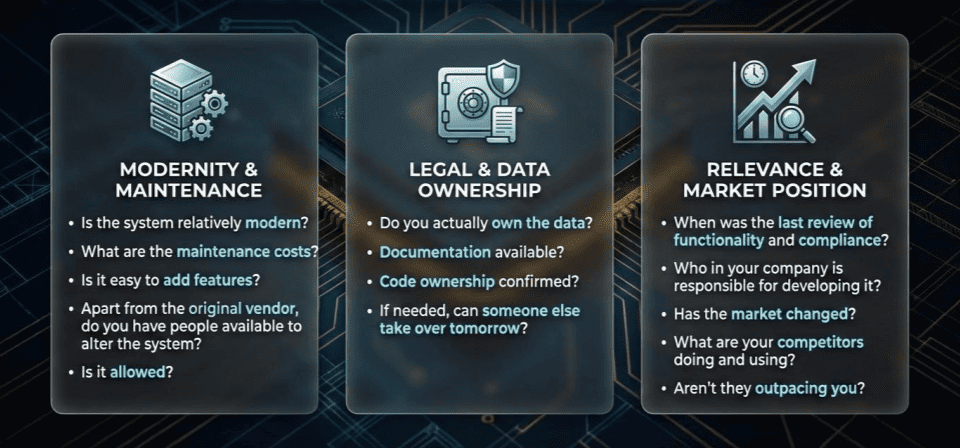
Questions to ask about an applicant tracking system
When you don’t need the custom solution
Not every agency needs custom ATS software. For firms with small recruiter teams, single-market focus, standardized hiring workflows, or limited technology budgets, off-the-shelf applicant tracking systems remain the most practical solution. The most recommended ATS for recruitment agencies in this category typically provide fast deployment, compliance coverage, and predictable licensing costs. Custom infrastructure becomes strategically relevant only when recruitment complexity or scale begins to outgrow platform constraints.
But when recruitment is the core revenue engine, not a supporting function, software stops being a tooling decision, it’s actually a crucial infrastructure decision.
Competition among employers on the market is huge. You want talent, and you want them before others get hold of them - software should enable you to work fast, it should help recruiters do their job.
Key takeaway
As always, there’s no one simple solution. You need to listen to your business. And remember:
Off-the-shelf ATS platforms don’t fail because they’re bad tools, they fail because recruitment businesses are structurally non-standardized.
Recruitment workflows differ by delivery model, geography, compliance regime, and candidate ownership logic, making true process standardization unrealistic.
The more an agency grows, the more software must adapt to its operating model, not the other way around.
SaaS ATS platforms often bundle functionality agencies never use, increasing cost without increasing operational value.
Data ownership is the most underestimated risk - candidate databases, communication history, and recruiter knowledge are core business assets.
Licensing and seat-based pricing models can turn scalable growth into escalating operational cost.
Hybrid realities emerge - ATS for compliance, spreadsheets for execution. That’s signaling structural misalignment.
Custom ATS development doesn’t require full replacement from day one; most agencies evolve toward it incrementally.
AI capabilities amplify the gap. Generic models automate tasks, proprietary models create competitive advantage.
Frequently Asked Questions
Applicant tracking system software supports recruitment operations by collecting applications, organizing candidate records, and managing hiring workflows. Its business value depends on how well the system reflects real recruitment processes and how easily it can scale with company growth.
There is no single best applicant tracking system for every recruitment company. The right solution depends on hiring volume, workflow complexity, integration requirements, and data control. Companies with specialized or growing recruitment operations often consider custom software when standard ATS platforms limit flexibility or scalability.
ATS stands for Applicant Tracking System. It is software used by recruitment teams to manage candidates, applications, and hiring workflows in one place.
An ATS-friendly resume is structured so recruitment systems can read and process candidate information correctly. It uses clear formatting, standard section headings, and avoids complex layouts that may block automated parsing.
Industries
New Articles
New blog posts you may be interested in

Quote automation for manufacturers: what changed in the last year
Manufacturers do not lose days on quotes because pricing is hard. They lose them because someone has to turn drawings, emails and spreadsheets into a clean list before pricing can even begin. That manual step is finally small enough to automate.
Read more
Finance + Operations Alignment: What Actually Improved
When finance and operations run in separate realities, companies usually pay twice, first in time, then in errors. This case explains what improved after aligning dispatch, document flow, and invoicing readiness.
Read more
What Changed After Moving to Reservation Lifecycle Control
This case outlines practical change after moving from volume-push behavior to controlled reservation lifecycle management. The goal was not another dashboard. The goal was to change operational decision quality over time.
Read moreRead also
Recommended reads for You
Quote automation for manufacturers: what changed in the last year
Manufacturers do not lose days on quotes because pricing is hard. They lose them because someone has to turn drawings, emails and spreadsheets into a clean list before pricing can even begin. That manual step is finally small enough to automate.
Read more
How companies lose control: too many tools, too many Excels, too many versions of the truth
Many companies don't screw up their digitalization by doing nothing. Quite the opposite. They gradually buy a series of tools, each of which solves a small part of their operation. But over time, they discover that instead of one functional system, they have fragmented processes, unreliable data, and people who keep their own Excel spreadsheets to themselves just to be safe.
Read more
Why Do Digital Transformation Projects Suffer such High Failure Rates?
Digital transformation is a priority for many companies, yet most initiatives still fail to deliver the expected results. Based on Moravio’s hands-on experience and insights shared by Dennis Fino, this perspective reflects what teams often overlook long before technology becomes the issue.
Read moreMore context helps
Describe the situation
A few useful details help us prepare: who is affected, how the work happens today, what has already been tried, and why this matters now.