

Large Language Models
Large Language Models (LLMs) represent a significant stride in the field of artificial intelligence, particularly within the sphere of advanced language AI. Our expertise in developing and implementing these models ensures superior performance and scalability for diverse applications, enhancing business intelligence and providing customized AI solutions for various industries.
LLMs powered application development at Moravio
At Moravio, we specialize in developing LLM-enabled applications, leveraging the power of Large Language Models to deliver advanced AI solutions. Our LLM experts are delivering customized development services to integrate LLMs into your projects. From creating LLM-powered applications to enhancing business intelligence, our team ensures scalable and efficient solutions. Trust Moravio for state-of-the-art LLM development and transform your business with our cutting-edge AI expertise.
Key Highlights of LLMs:
Definition: LLMs are AI Language Models developed to process, understand, and generate human-like text based on the context of vast datasets they are trained on.
Significance: In the AI realm, LLMs are pivotal for their ability to mimic human linguistic patterns, making them integral to advancing AI's understanding and generation of natural language.
How LLMs Function:
LLMs operate on the foundation of neural networks, particularly transformers, which are adept at managing sequential data, such as sentences and paragraphs. The operational framework of LLMs involves:
Data Analysis: Trained on extensive text corpora, LLMs analyze patterns, syntax, and semantics, learning to predict the next item in a sequence.
Contextual Understanding: Through machine learning algorithms, LLMs grasp the nuances of context, enabling them to generate relevant and coherent responses.
Adaptive Learning: Continuous training allows LLMs to improve over time, refining their language understanding and generation capabilities.
Core Components of LLM Technology
Neural Networks
At the heart of LLMs lie neural networks, particularly a type known as transformers. These are designed to handle sequential data, enabling the model to process and generate language based on the context of preceding words or sentences.Training on Big Data
LLMs are trained on vast datasets comprising diverse text sources. This extensive training helps the models to learn a wide range of language patterns, syntax, semantics, and idioms.Contextual Understanding
Through training, LLMs develop the ability to understand the context within which words are used. This is crucial for generating coherent and relevant text, as the meaning of words can vastly change depending on their context.Algorithmic Innovations
LLMs leverage advanced algorithms that allow them to predict the likelihood of a sequence of words, making them highly effective at generating text that is grammatically correct and contextually relevant.
Advanced Techniques in LLMs
Attention Mechanisms
A key feature of transformer models is the attention mechanism, which helps the model to focus on relevant parts of the text when generating or interpreting language. This allows LLMs to maintain coherence over longer stretches of text.Fine-Tuning
After the initial training, LLMs can be fine-tuned on specific datasets to specialize in particular tasks or industries, enhancing their accuracy and relevance in those areas.Scalability
LLMs are designed to scale, meaning they can be trained on increasingly large datasets to improve their understanding and generation capabilities. This scalability is essential for adapting to the vast and growing amount of online text.
At Moravio, we excel in developing AI applications powered by LLMs. Our expert team offers custom LLM solutions, integrating advanced AI to enhance business processes. Whether for content creation, customer service, or language translation, our LLM-enabled applications deliver superior performance and adaptability. Hire our LLM experts to transform your business with cutting-edge AI development.
Transforming Business Operations with Large Language Models: Practical Use Cases
Content Creation
LLMs can automate the generation of high-quality, relevant content for websites, blogs, and social media platforms, significantly reducing the time and resources required for content marketing efforts.
Customer Service
Implementing LLMs in chatbots and virtual assistants can enhance customer service experiences by providing quick, contextually accurate, and human-like responses to customer inquiries, improving satisfaction and engagement.
Language Translation
LLMs can offer advanced translation services that go beyond word-for-word translation, capturing the nuances of language and cultural context, thus facilitating global business communication and expansion.
Market Research
By analyzing vast amounts of textual data from various sources like social media, forums, and customer feedback, LLMs can uncover insights about market trends, consumer preferences, and competitive intelligence, informing strategic decisions.
Email Automation
LLMs can be used to personalize and automate email communication, from marketing campaigns to customer follow-ups, ensuring relevance and engagement without manual intervention.
Document Summarization
In legal, academic, or corporate settings, LLMs can quickly summarize lengthy documents, reports, and research papers, saving time and highlighting essential information for decision-making.
Sentiment Analysis
LLMs can analyze customer feedback, reviews, and social media conversations to gauge public sentiment towards products, services, or brands, enabling proactive reputation management and product improvements.
Training and Development
LLMs can create customized training materials and interactive learning modules, adapting to the learner's pace and style, thus enhancing the effectiveness of educational programs.
Product Descriptions
E-commerce platforms can use LLMs to generate unique, compelling product descriptions at scale, improving SEO and conversion rates without the need for extensive copywriting resources.
Personalized Recommendations
By analyzing user interactions and preferences, LLMs can generate personalized content, product, or service recommendations, enhancing user experience and loyalty.
Projects Using This Technology

Automating steel detailing: more projects without more drafters
A US steel-joist manufacturer wanted to run four to five thousand projects a year with thirty-five drafters instead of sixty. The bottleneck was never the steel — every shop drawing and every bill of materials was still drawn and typed by hand in AutoCAD.
View Case Study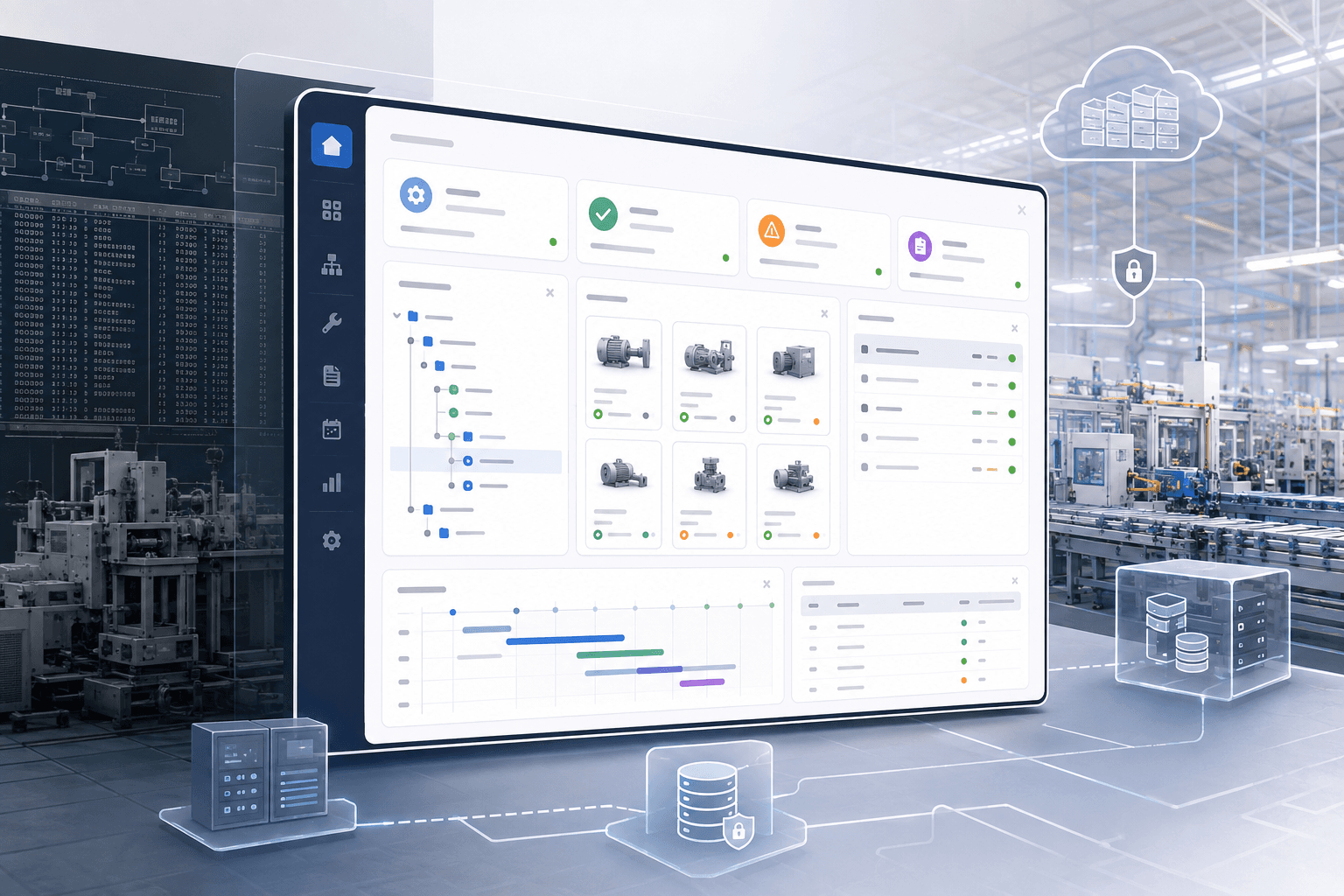
How we rebuilt a 30-year-old maintenance system without stopping the old one
For almost thirty years, this product has been what keeps factory equipment serviced on schedule, and the plants that run it still depend on it every day. What changed was the question buyers started to ask: they wanted it in a browser. The owners decided to answer that question early, while the product was still strong. Three weeks after we agreed the architecture, they watched the first working version of the successor run on screen, and the product they sell today carried on serving every plant without a single interruption.
View Case Study Llama
Llama Anthropic
 ElevenLabs
 LangChain
 MediaPipe
 ChatGPT
 Text to Speech
 Generative AI
 Dialogflow
 Mistral
 Retrieval Augmented Generation (RAG)
 Speech to Text
More context helps
Describe the situation
A few useful details help us prepare: who is affected, how the work happens today, what has already been tried, and why this matters now.