

How We Centralized Our Data for Smarter Decision-Making Using BI
Pavel Janko, Head of Delivery at Moravio, shares how we improved decision-making and boosted our work by centralizing data using BI

Chief Technology Officer, Head of Delivery

On this page(6)
I'm excited to share how we've embraced innovative technical solutions at Moravio to streamline our operations. As Head of Delivery, I oversee the successful implementation of projects while continuously looking for ways to improve our internal processes. One of the more impactful changes we've made is integrating business intelligence, and I'm excited to share the insights we've gained along the way.
In today's fast-paced business environment, access to timely and accurate information is essential. However, many organizations still struggle with siloed data and fragmented reporting, which makes it difficult to gain a comprehensive view of their operations and to share data effectively between departments. This was exactly the situation we faced at Moravio. Our journey to solve these challenges not only transformed our operations but also provided valuable insights into the power of business intelligence.
Understanding How Business Intelligence Works
Business intelligence works by transforming raw data into meaningful and actionable information. It involves several key processes:
Data Collection and Integration : Gathering data from various internal and external sources such as databases, cloud services, and spreadsheets. This data is then integrated into a centralized repository.
Data Warehousing : Storing the integrated data in a data warehouse optimized for query and analysis, rather than for transaction processing.
Data Analysis : Utilizing analytical tools and techniques to explore the data, identify patterns, trends, and relationships that are not immediately apparent.
Reporting and Visualization : Presenting the results of data analysis in understandable and actionable formats through reports, dashboards, charts, and graphs.
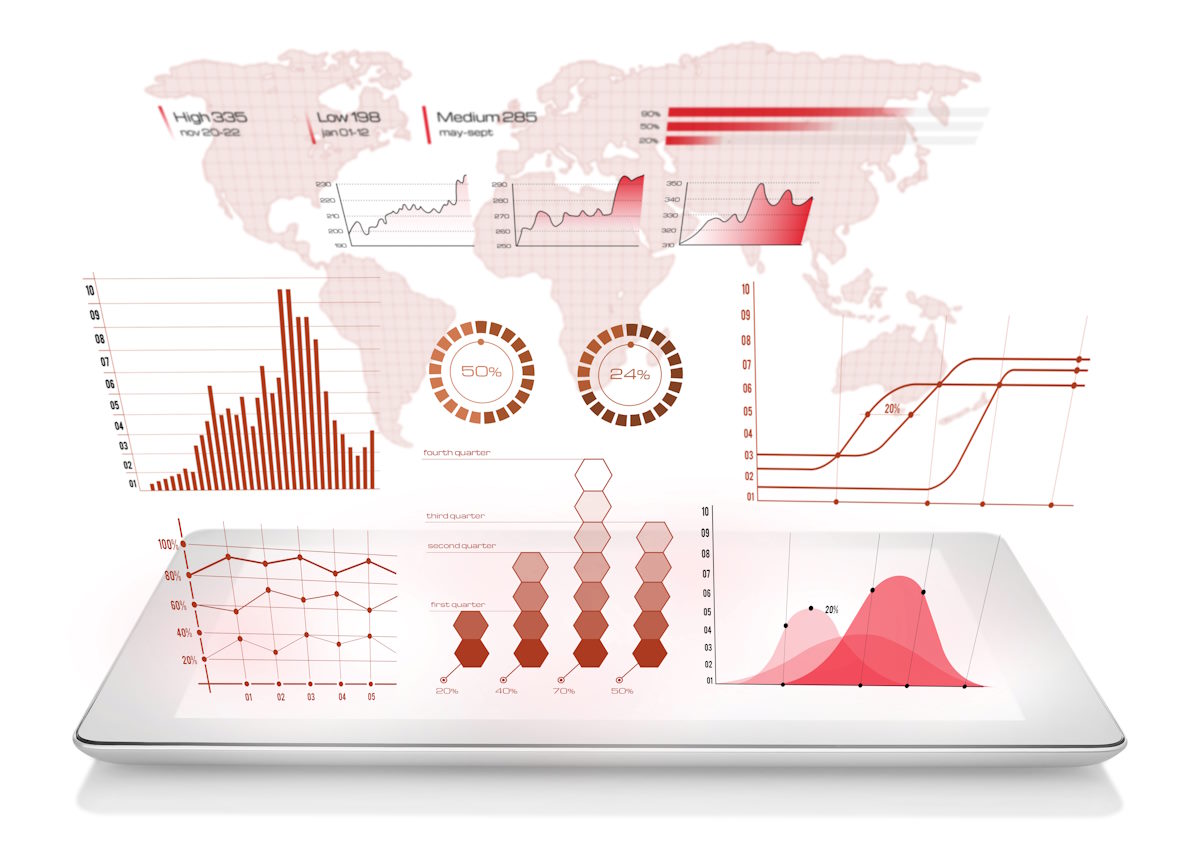
Data Visualization Examples
Improvements in Business Intelligence
The field of BI has seen significant advancements over the years, shifting from cumbersome, monolithic on-premise systems to modern, cloud-based managed solutions. Early BI implementations often involved very complex software that required dedicated IT teams to maintain, resulting in high costs and long deployment times. These systems, while powerful, lacked the agility needed to keep up with evolving business needs.
In contrast, today's managed cloud BI solutions offer a range of improvements. They allow organizations to scale their data infrastructure seamlessly without worrying about physical hardware, significantly reducing costs and time for deployment. Managed platforms provide the flexibility to store and process massive datasets efficiently, while other third-party make visualization accessible for non-technical users. This evolution has shifted BI from a niche technical process to a user-friendly, business-wide tool, enabling companies to adapt quickly and derive insights in real time.
Data Silos Limiting Visibility and Collaboration
Like many growing companies, we relied on various tools and platforms for daily operations, with each department using its preferred solution. Sales used one CRM, controlling had its own system, and project management relied on different tools. While this worked well for department-specific tasks, as Moravio grew, it became increasingly clear that we needed a unified approach to data.
Our management needed to make proactive, data-driven choices, and for that, we had to break down the data silos. It was time to rethink our approach and establish a centralized data system that could serve as the foundation for smarter decision-making across the company.

discussing the idea of creating our eagle using BI
Building Eagle as Our BI Platform
To address these challenges, we developed an internal system called Eagle. The goal of Eagle was to aggregate data from various tools, creating a single source of truth for the organization. We have created our own simple data orchestration solution to pull data from our disparate systems into Google BigQuery—a scalable data warehouse. Once the data was in BigQuery, we created different views to organize and structure the information, and Eagle was then used to visualize and analyze the data effectively.
By integrating all our data into one place, Eagle enabled us to create cross-departmental reports that provided insights we couldn't achieve before. Instead of being reactive, we began to operate with foresight, making strategic adjustments based on comprehensive, real-time information. We could identify trends and patterns across departments, optimize resource allocation, and even predict potential challenges before they escalated.

the process of developing a new internal system in Moravio
Leveraging Third-Party Tools for Business Intelligence
While building an internal solution like Eagle worked well for Moravio, using third-party tools for various stages of the BI process can save costs and reduce development overhead. Depending on the needs and size of your organization, third-party tools can be employed for different parts of the BI process, such as data orchestration, data warehousing, and data visualization:
Data Orchestration : Coordinating and automating the data integration process is a key part of BI. Third-party tools like Keboola, Apache Airflow, or Fivetran can be leveraged to automate the extraction and loading of data from different sources into a data warehouse.
Data Warehousing : For storing and managing large volumes of data, solutions like Google BigQuery, Amazon Redshift, and Snowflake offer scalable, secure, and efficient data warehouses. Opting for a managed warehouse solution can also significantly reduce infrastructure management overhead, which is a reason why we took advantage of that with Eagle.
Data Visualization : For reporting and visualization, tools like Tableau, Looker, and Power BI are popular choices. These platforms enable users to create intuitive dashboards and reports that can present data in an actionable format for decision-makers.
Depending on your business requirements, you can mix and match these tools or choose an end-to-end BI platform that integrates multiple capabilities.
Key Takeaways for Businesses
Our journey taught us that the power of business intelligence lies not only in the data itself but in the ability to integrate and make sense of it. Here are a few key takeaways that might help you:
Start with the Problem : Identify the specific limitations of your current data structure. Whether it's an inability to create comprehensive reports or inefficiencies in decision-making, understanding the pain points will guide your business intelligence transformation.
Unify Your Data : Investing in a centralized data solution can significantly enhance your ability to derive meaningful insights. Tools like Keboola and Google BigQuery are great for orchestrating and storing data, but what matters most is creating a single source of truth.
Empower Decision-Makers : The ultimate goal of business intelligence is to empower your teams to make better decisions. Focus on creating intuitive views and dashboards that provide the information they need to act effectively and proactively.
Our experience shows that business intelligence isn't just a technical solution — it's a cultural shift towards data-driven decision-making. If your business is looking to achieve the same transformation, investing in the right tools and approach can unlock powerful insights that propel your growth.
Technologies
 ChatGPT
Industries

New Articles
New blog posts you may be interested in

Quote automation for manufacturers: what changed in the last year
Manufacturers do not lose days on quotes because pricing is hard. They lose them because someone has to turn drawings, emails and spreadsheets into a clean list before pricing can even begin. That manual step is finally small enough to automate.
Read more
Finance + Operations Alignment: What Actually Improved
When finance and operations run in separate realities, companies usually pay twice, first in time, then in errors. This case explains what improved after aligning dispatch, document flow, and invoicing readiness.
Read more
What Changed After Moving to Reservation Lifecycle Control
This case outlines practical change after moving from volume-push behavior to controlled reservation lifecycle management. The goal was not another dashboard. The goal was to change operational decision quality over time.
Read moreRead also
Recommended reads for You
Quote automation for manufacturers: what changed in the last year
Manufacturers do not lose days on quotes because pricing is hard. They lose them because someone has to turn drawings, emails and spreadsheets into a clean list before pricing can even begin. That manual step is finally small enough to automate.
Read more
How companies lose control: too many tools, too many Excels, too many versions of the truth
Many companies don't screw up their digitalization by doing nothing. Quite the opposite. They gradually buy a series of tools, each of which solves a small part of their operation. But over time, they discover that instead of one functional system, they have fragmented processes, unreliable data, and people who keep their own Excel spreadsheets to themselves just to be safe.
Read more
Why Do Digital Transformation Projects Suffer such High Failure Rates?
Digital transformation is a priority for many companies, yet most initiatives still fail to deliver the expected results. Based on Moravio’s hands-on experience and insights shared by Dennis Fino, this perspective reflects what teams often overlook long before technology becomes the issue.
Read moreMore context helps
Describe the situation
A few useful details help us prepare: who is affected, how the work happens today, what has already been tried, and why this matters now.