
Everyone names a different first problem.
Production says planning, sales says the quote, the office says paperwork. Each of them is right about their own desk, and the list never turns into an order of work.
Operations and priorities
We follow one real order through your company and name the place to start.
Order · Quote · Handover · Waiting · Cost
Five things could work better, and every person you ask starts with a different one. We walk one real order through the operation, find the step that holds up the others, and put a cost on it before anyone buys anything.
Is this your case?
The list of improvements is rarely the hard part. The order of work is, and that order comes from one place, the way a real order moves through the company.
Production says planning, sales says the quote, the office says paperwork. Each of them is right about their own desk, and the list never turns into an order of work.
Vendors have priced a planning tool, a CRM and a document archive. None of them looked at the step where the work actually stands still.
You know a quote takes a week and that invoices leave late. Nobody has counted what those days cost you in a month, so there is nothing to compare an offer against.
A tool made one desk faster and the work piled up at the next one. The time from enquiry to invoice stayed where it was.
What it costs today
Without a clear order of work, the budget follows the person who argues best or the vendor who called last. The improvement lands somewhere real, and the total time from enquiry to invoice stays the same, because the step where the work waits was somewhere else. Decisions get postponed for the same reason. Two options nobody has costed cannot be compared, so the company keeps paying for the current state while it waits for certainty.
Three of these steps are worth changing. The one that goes first is the one holding up the other two, and which one that is depends on your operation.
Your options
A setting in a system you already own, one connection between two tools, or a short analysis of one flow can each be the right first step. We say which one applies before anything is built.
Fits when
everyone names a different first problem
We follow one real order through the operation with the people who handle it. You get the step that holds up the rest, what it costs you, the options for it and an estimate for the first one.
Fits when
the step that waits is a standard job
Approval rules, templates, price lists and user rights often already exist in a system you pay for. We check that before proposing anything custom, and where a proven product covers the step well we will tell you to buy it.
Fits when
the work waits on a hand-over between two tools
One connection removes the retyping that holds up a whole step, and both systems stay as they are. It is usually the smallest change that removes a real delay.
Fits when
the step holding up the others follows rules no product covers
We build that one part and connect it to what you keep. The scope covers one step of the flow, and the scope and the estimate are written before anything is built.
Fits when
the delay sits in a responsibility nobody owns
Some delays come from an unclear decision or from a person nobody has replaced. Software adds cost there and changes nothing. We will say so.
How we work on it
If your business were simple, standard software would already fit. Your operation has rules that never made it into a manual, and we learn them from the people who apply them every day.
We walk one order, one quote or one shift from the first e-mail to the invoice, with the people who handle each step. We write down where it waits, who decides and which cases go around the standard route.
Every opportunity gets what it needs, what it would free up and what it depends on. Side by side on one page, they can be compared and defended.
The first step is agreed in writing with an estimate, and the first version goes to the people who do the job while it is still small. We change it with them.
We take responsibility for the result in daily use and for the step that follows. The code, the data and the rules stay yours.
Relevant work
Transport operations
400+ daily users
Ridera moves orders and deliveries across dispatch, drivers, administration and finance. The system started in fuel trading, where documents from the field had to reach administration and invoicing, and once it held there the same flow was extended to the construction waste division.
Construction, roofing and assembly
Quotes, hours and deliveries in one place
Pricing lived in spreadsheets that only their author could safely touch, purchase prices were retyped by hand and labour was estimated from memory. The quote is now one place with the price list, the labour rates and the hours behind it, and the accounting data is taken over daily.
Analysis output
Model example, no client numbers
A model output reads like this. Three places where the order stands still, what each one needs in order to change, what it would free up, and the reason one of them goes first, because the other two sit behind it. This is a model example, drawn to show the shape of the analysis, and it carries no client numbers.
The pattern repeats across sectors. One part of the operation holds up the rest, and the first job is to find out which part and what it costs you.
We start with one order
Why Moravio
We check first whether a system you already pay for can cover the step. Custom development starts where your rules, your data or the exceptions require it.
ERP, CRM and the tools that do their job stay in place. What we add reads from them and writes back to them.
We name the step that holds up the others and start there. The next step is agreed once the first one holds in daily work.
The code, the data and the rules stay with your team, and the system can run on your infrastructure.
The first step
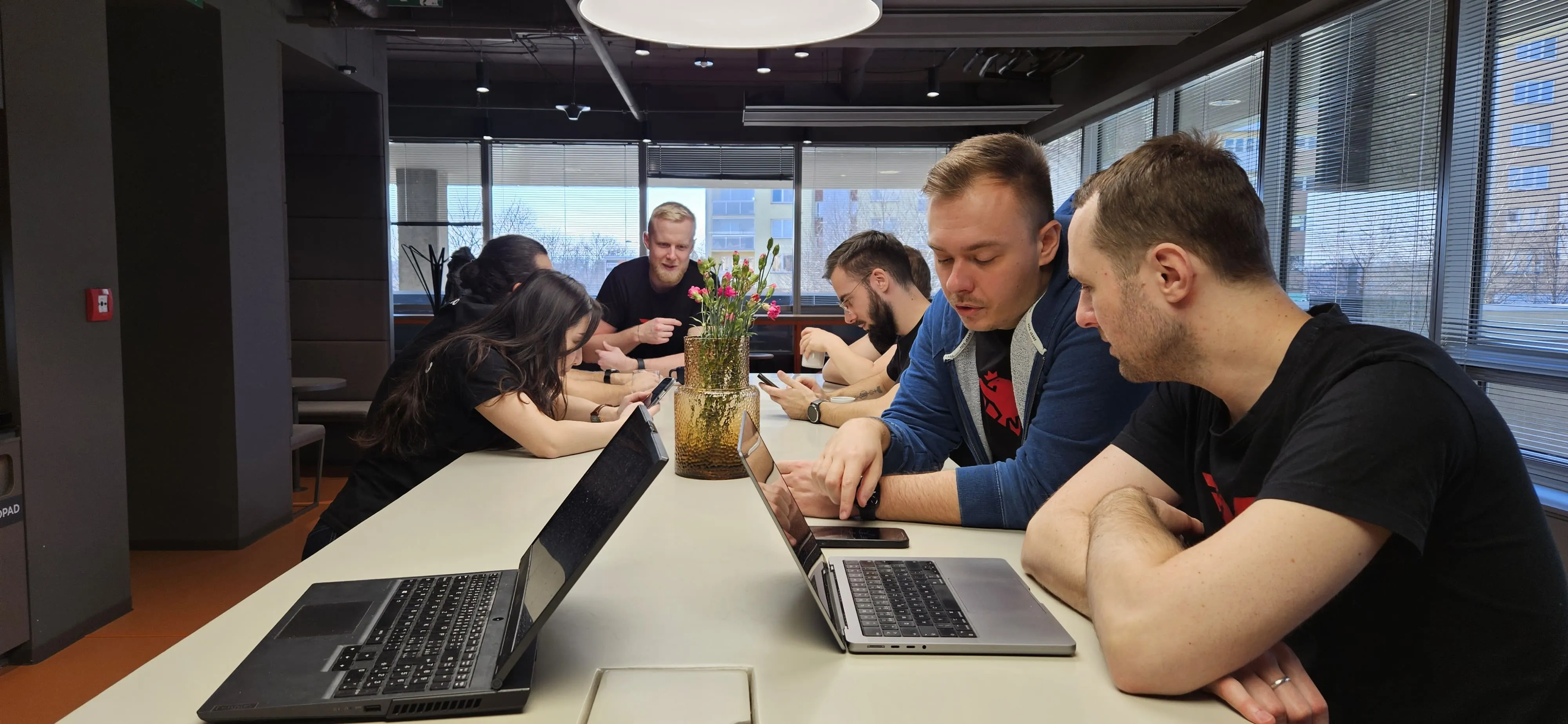
We take one real order and follow it through every desk it passes, with the people who handle it. You need nothing prepared and no specification. You talk to the people who design and build the system, so nothing is lost on the way to a delivery team.
01
We mark every point where the order stands still, waiting for a person, an approval, a price or a document.
02
We note where the same data is entered a second time, and which system it came from.
03
We write down who decides at each step, the rule they apply, and the cases they handle by hand.
04
We put the opportunities side by side with what each one needs, what it would free up and what it depends on, and we name the one to start with.
What you bring
One real order, from the enquiry to the invoice. Nothing prepared, no specification.
What you leave with
Three to five opportunities with the constraint named, what each one would cost and free up, the one that goes first, and a scope and estimate for it.
FAQ
Start with the situation
Send us the messy version. We will help make the next decision clear.